


Digitization of healthcare services is the driving force behind streamlining clinical workflows, enabling faster diagnoses, and enhancing patient engagement. With growing health awareness, widespread use of smartphones, and a clear interest toward virtual consultations, medical apps are becoming essential for modern healthcare.
According to Grand View Research, the global healthcare mobile application market size will reach USD 1,070.58 billion by 2030 at 45.2% CAGR. - Source
Creating a mobile application is an essential step through which various organizations deliver top-notch medical services to patients. However, developing user-friendly, secure, and reliable digital healthcare solutions may not be as simple as launching other apps.
In this comprehensive guide, you will come across the best practices for healthcare mobile app development. Keep reading to explore key compliance insights and emerging trends to turn your clinical care app idea into reality.
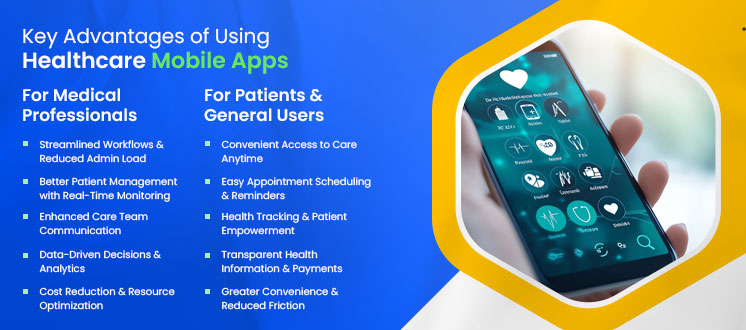
Key Advantages of Using Healthcare Mobile Apps
 t
t
More than 43% of the US population uses healthcare apps to track and manage diseases, medication, nutrition, and more. The development of mHealth applications is reshaping healthcare by enabling real-time monitoring, facilitating remote consultations, supporting data-driven decision-making, and empowering patients to take an active role in health management.
Here’s an overview of how medical app development is beneficial for patients and healthcare professionals.
For Medical Professionals
Mobile apps offer a strong value proposition for physicians, nurses, hospital administrators, and other clinical staff in the US healthcare market. Below are the benefits they can have with medical apps:
-
Streamlined workflows and reduced administrative burden
-
Better patient management via real‑time data and monitoring
Mobile healthcare apps can integrate with wearable devices or IoT sensors, which include connected blood pressure monitors, glucose monitors, and oxygen saturation sensors. Providers can monitor patients remotely, receive alerts for abnormal values, and intervene early.
This remote monitoring model allows clinicians to manage larger registries of patients, especially in chronic‑disease management, without requiring every encounter to be in‑person.
-
Enhanced communication & collaboration among care teams
Modern healthcare mobile app development enables secure messaging, group communication, and video or teleconsultation features. These enable doctors, nurses, specialists, and other allied staff to coordinate more effectively outside of traditional workflows, comprising pages, phone calls, and paper notes. Secure mobile messaging and alerts help speed decision‑making.
For example, a clinician can review a test result on their smartphone and immediately message the care team rather than wait until they return to the workstation.
-
Better Decisions, Analytics, and health insights
Evaluating health records of patients becomes easier with mobile applications. Providers utilize dashboards and analytic tools to identify potential diseases, stratify risk, and plan treatments accordingly. This is particularly important for US enterprises that want solutions to control costs, improve quality metrics, and meet the needs of users.
Clinicians with access to aggregated data can intervene earlier, adjust treatment plans, and manage care prospectively.
Clinicians with access to aggregated data can intervene earlier, adjust treatment plans, and manage care prospectively.
-
Cost‑reduction and resource optimization
Mobile-based applications can help healthcare organizations reduce overhead costs, lower error rates, and improve staff efficiency. Developing a clinically efficient solution reduces redundant visits, enables telehealth or remote monitoring, simplifies paperwork, and improves operational workflows.
For many startups and enterprises, building such apps that facilitate cost savings for providers is a key value driver. Moreover, mobile health apps are a powerful tool for medical professionals and caregivers to streamline workflows, enhance patient management, improve care coordination, leverage data, and reduce costs.
For Patients and General Users
From the patient or general‑consumer side, healthcare mobile app development offer several compelling benefits:
-
Enhanced access to care anytime, anywhere
Mobile apps break down traditional barriers, which include geography, office hours, and scheduling delays. Patients can connect via telehealth (video or chat), access their records, send messages to providers, and often avoid long delays or travel.
Especially in the US, where travel time, wait‑times, and healthcare deserts are common scenarios, this convenience matters.
-
Simplified appointment booking, reminders & scheduling
Many applications provide patients with features to schedule, cancel, or reschedule appointments. These programs are also effective for receiving push‑notification reminders of upcoming visits, medication renewals, and lab tests.
Incidents like missed appointments can be reduced to a greater extent through mHealth apps. For general users, this translates into smoother interactions with the care system.
-
Empowerment via health‑tracking, education and engagement
Medical or fitness-tracking apps allow patients to track vitals, including heart rate, steps, sleep, and glucose, to integrate wearable data, and receive alerts or coaching. Many interfaces also provide educational content, medication reminders, and support adherence.
This greater engagement supports healthier behaviors, better treatment adherence, and makes patients feel more empowered.
-
Better transparency of health information and payments
Apps allow patients to quickly access their medical history, test results, prescriptions, and facilitate smooth payments, which include online billing and insurance claims.
For example, having access to your test results soon after processing means better insight and less dependence on medical staff for follow-ups.
-
Reduction in friction and enhanced convenience
Healthcare mobile app development addresses many pain points in the patient journey. These apps enable remote visits, online payments, centralized health data, and self‑service features, which streamline patient care. Through this approach, many features are activated, like reducing the time spent in waiting rooms, fewer phone calls, and more control over ongoing or upcoming treatment.
From a consumer perspective, the appeal lies in convenience, responsiveness, and empowerment. For patients and general users, digital medical care platforms deliver improved access, streamlined scheduling, engagement via tracking and education, greater transparency, and enhanced convenience.
Popular Categories of Healthcare Mobile App Development
U.S. startups or enterprises looking to develop healthcare apps categorize apps based on their primary target audience. They design software for medical professionals, hospitals, patients, and general users. Understanding these types helps in scoping, feature definition, regulatory planning and go‑to‑market strategy.
Apps for Hospitals and Medical Professionals
Below are the features of mHealth apps developed for providers, hospitals, clinics, and medical staff:
-
Digital clinical workflow apps
These apps support healthcare providers by streamlining daily workflows, offering access to EHRs, lab results, clinical decision support, secure messaging, teleconsultation modules, and care-team collaboration tools. They often integrate with hospital information systems (HIS) or practice management systems (PMS) for smooth data exchange.
Patients can easily connect with on-call physicians through mobile apps. These interfaces help review their test results and receive remote consultations, improving both accessibility and continuity of care.
-
Hospital or clinic management apps
These applications focus on administrative functions, which include appointment scheduling, patient intake, billing or invoice management, resource allocation, and staff coordination.
When it comes to managing outpatient schedules, tracking room or bed availability, and automating insurance verification, there is no better alternative than hospital management apps. These applications help healthcare departments optimize operations and reduce costs.
-
Remote monitoring & telehealth platform apps
These apps enable clinicians to monitor patients remotely (for example, via wearables or IoT), receive alerts, adjust treatment plans, or conduct virtual visits. Creating these interfaces extends the healthcare provider’s reach beyond the boundaries or working hours of the clinic.
According to a report, more than 37.0% of adults increased the use of telemedicine with age. Now, the demand for remote patient monitoring (RPM) apps is consistently growing across the US.
-
Decision‑support and analytics apps
Apps that support data collection, analytics, population health dashboards, predictive risk models, and provider reporting. These practices help meet quality metrics, generate insights, and support value‑based care models.
When planning such apps, enterprises must pay special attention to integration with legacy systems, interoperability standards (such as HL7 or FHIR), and user workflows. Sometimes, you may also create programs for clinician adoption and regulatory compliance, which fall under the category of Software‑as‑Medical‑Device (SaMD).
Apps for Patients and General Users
These are mobile applications aimed at end‑users: patients, caregivers, health consumers, wellness‑seekers. Common categories include:
-
Wellness & lifestyle apps
These track steps, diet, sleep, hydration, fitness, integrate wearable data, and provide coaching/education. They help users proactively manage health and wellness.
For US enterprises, these apps can serve as engagement tools in broader healthcare services.
-
Chronic‑condition management apps
Apps built for patients with conditions such as diabetes, hypertension, asthma, COPD, and arthritis. These may enable logging of symptoms, vitals, medication adherence, remote monitoring, often integrated with provider apps, and educational modules.
-
Patient‑portal and telehealth apps
Apps that allow users to access their health records, lab results, schedule appointments, pay bills, and have virtual visits with providers. They may support exclusive features like messaging with clinicians and e‑prescriptions.
To boost patient‑provider interaction and drive convenience & engagement, healthcare mobile app development is beneficial for many businesses.
-
Medication‑reminder, pill‑tracking and feature‑apps
Very targeted apps whose primary function is medication reminders, refill notifications, drug interaction checks, etc. Even though narrower in scope, they serve a critical need and often integrate with wearables or provider systems.
From a startup/enterprise perspective, focusing on narrower niches can reduce complexity and risk.
-
Specialized health‑apps (women’s health, diagnostics, etc.)
For example, apps for fertility or menstrual tracking, mental‑health or CBT tools, symptom‑checkers, and preventive‑health education. These apps are increasingly important in the U.S. market and cater to specific segments.
Many enterprises that develop apps for medical patients, specifically focus on improving the user experience (UX), since many of them are usually older or less tech‑savvy. They also prioritize data privacy, security, regulatory boundaries, in case the app makes diagnostic claims, and integration with provider workflows, if relevant.
How to Mitigate Risks and Enjoy Healthcare App Perks?
Mobile healthcare applications offer significant benefits, which include improved care access, streamlined workflows, and data-driven decision-making. However, especially in the regulated US market, healthcare firms must address potential risks and pitfalls.
Below are key risk areas and some tips to mitigate them:
Lack of Detailed Focus in One Domain
It is often observed that when a doctor or patient installs a health app, they focus on addressing one issue, not multiple. One of the most frequent mistakes among healthcare app developers is attempting to solve too many problems in one application.
This is how some interfaces dilute the value of medical care, complicate design, and risk low adoption.
Risk: The app tries to solve too many problems, delivering weak functionality. Users may abandon it, affecting provider workflows and ROI.
Mitigation: Conduct market research to focus on one domain (e.g., medication adherence, remote monitoring). Build a strong MVP, show measurable value, then expand. Monitor engagement and refine UX.
Non‑Compliance with Laws and Regulations
In the U.S., healthcare is highly regulated. Non‑compliance is not optional, and it can lead to fines, litigation, reputational damage, and a barrier to the market.
For example, violating the Health Insurance Portability and Accountability Act (HIPAA) can cost the company thousands of dollars per violation, with annual caps (say approximately $1.5M) when not addressed properly.
Risk: Handling PHI without safeguards can trigger HHS/FDA enforcement. Incorrect classification or missing documentation can delay launch or expose the company to fines.
Mitigation: Companies can engage legal or regulatory advisors early. They can design secure data flows with encryption, role-based access, and logging details. It is important to maintain documentation and validation, ensuring APIs comply with healthcare regulations.
Security Concerns
Security is a severe technical risk in healthcare mobile app development. Patient data, which includes medical history, test results, and insurance data, is highly sensitive and valuable to attackers. A recent survey found that 62% of organizations believed their mobile apps were secure yet had experienced breaches in the past year.
Risk: Data breaches can cause fines, litigation, brand damage, and patient harm. Common issues include hard-coded credentials, weak encryption, and insecure third-party code.
Mitigation: You can start by following a security-by-design principle. Implement threat modeling during development, conduct continuous security testing and use strong encryption for data at rest and in transit.
Companies can take the help of expert mobile app developers to enforce multi-factor authentication (MFA), leverage secure and up-to-date APIs and libraries, and manage devices with Mobile Device Management (MDM) solutions.
Managing Multiple Channels and Devices
Healthcare apps often run across smartphones, tablets, and web platforms. This creates risks like inconsistent data syncing, device-specific bugs, and security vulnerabilities. Proper testing, unified data management, and secure cross-device protocols can ensure reliable performance and protect sensitive patient information.
Risk: Inconsistent functionality across devices can confuse users, reduce adoption, and create security gaps. Managing updates, compatibility, and interoperability increases overhead.
Mitigation: Define supported devices early. Use secure cross-platform frameworks. Separate UI/UX from core logic. Ensure consistent authentication/session management. Monitor device analytics and integrate MDM/EMM for updates and deployments.
Stepwise Navigation to Healthcare Mobile App Development
Several steps are involved when it comes to developing a custom mobile app for your healthcare business. If your ultimate plan is to develop a user-friendly application to help connect medical professionals and patients, below are some important considerations.
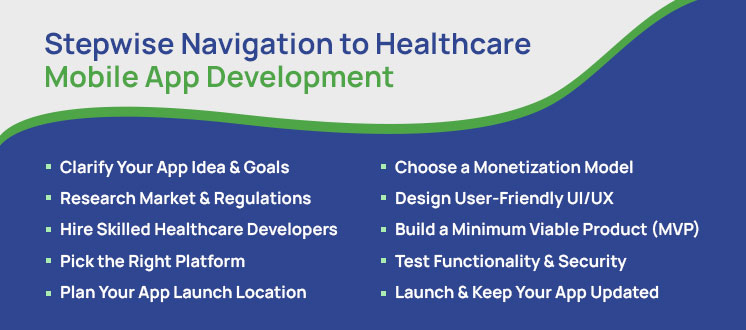
Clarify Your App Idea & Goals
The purpose behind launching a clinical app must be clear to you. If your business idea can successfully match the needs of end users, it's worth proceeding to the development.
Start by preparing a checklist comprising the list of problems faced by people opting for traditional healthcare services. Evaluate the features in your application and how they can solve these challenges efficiently. This is usually the stage where you can correctly categorize your digital medical care solution.
For example, if your target audience is looking for an app to track anxiety, mental health, steps, or diabetes, keep the design and features accordingly.
Research Market & Regulations
To understand what your end-users expect from the mobile app, do some market research. It also helps your firm maintain regulatory compliance with the healthcare industry and launch apps successfully on app stores.
Many enterprises and startups offering quality medical care handle a vast volume of user data. Compliance with HIPAA regulations is an important step that keeps this data under PHI. Conducting thorough research into the US healthcare market and your competitors can help your business remain compliant with the regulations.
Hire Skilled Healthcare Developers
Various DIY templates are available for developing custom mHealth apps, but they may not always align with your company’s goals. To ensure all important technologies and features are correctly integrated, partner with a reputable company for clinical mobile app development.
Having a qualified and reliable team of developers, project managers, UI/UX designers, marketing specialists, and quality analysts can help bring your clinical app idea to life. This is where Proquantic can boost business growth with custom healthcare mobile app development.
Pick the Right Platform
The right platform strategy ensures your app is convenient, widely adoptable, and supports users to access digital healthcare.
Once the purpose of your healthcare app is clear, selecting the right platform becomes crucial. Decide whether your app will launch on Android, iOS, or both to reach the widest audience. Web-based access can complement mobile apps, providing an easy entry point for users less comfortable with smartphones.
It is best to integrate voice-activated devices or smart home assistants to make your app more accessible. These features can bring in more users who are especially seeking hands-free monitoring or reminders. Keep your audience in mind: older patients may prefer a website or tablet interface, while younger users might pick mobile apps and wearables.
Plan Your App Launch Location
Choosing the right launch location is crucial for your healthcare mobile app development. Most startups target their home country initially, leveraging familiarity with local regulations, patient behaviors, and healthcare standards. However, if you plan an international debut, research each target country’s compliance requirements, data privacy laws, and healthcare protocols.
Prepare a checklist to understand the personas of local users, language preferences, and common medical practices. Having these details ensures your app resonates with patients and providers alike.
A well-planned launch location strategy for your mHealth app minimizes regulatory hurdles, maximizes adoption, and sets the stage for scalable and cross-border success.
Choose a Monetization Model
Evaluate your target audience and the value your app delivers through premium features, personalized health tracking, or teleconsultation services. Subscription plans often work well for consistent revenue, while a freemium approach lets users try basic features before upgrading.
Other options include in-app advertising, partnerships with clinics or wellness brands, and transaction-based commissions within marketplaces. Aligning your monetization strategy with user needs ensures your app generates revenue without compromising patient trust or engagement.
Design User-Friendly UI/UX
Your app design should cater to your target audience. Older users mostly benefit from simple navigation, clear labeling, and larger fonts, while younger users often prefer dynamic layouts with interactive features.
Decide whether the app is meant for healthcare professionals, who need quick access to clinical tools, or the general public, who prioritize easy-to-understand health information. Moreover, ensure that your design adapts to different screen sizes and devices. Choose a better UI/UX design to improve user engagement, app usability, and overall patient satisfaction.
Build a Minimum Viable Product (MVP)
MVP development is a smart step to bringing your healthcare app to life. Instead of investing in a full-featured app immediately, it focuses on the core functionalities that solve the primary problem for users.
This approach allows for collecting real-world feedback, validating your concept, and making improvements based on the needs of actual patients. Presenting an MVP to potential investors demonstrates market interest and the app’s potential, increasing confidence in your idea while minimizing initial development costs and risks.
Test Functionality & Security
Evaluate the performance, usability, and reliability of your app across all features to ensure smooth healthcare workflows. Prioritize security checks to protect sensitive patient data while complying with relevant regulations.
Verify APIs, geolocation services, and data integrations to make the app safely operate across devices, networks, and varying connectivity conditions. Conduct in-depth usability testing to ensure intuitive navigation and a positive user experience. Rigorous testing not only identifies bugs early but also reduces development costs, enhances app performance, and strengthens trust with users and healthcare providers.
Launch & Keep Your App Updated
Your healthcare app is ready for users after completing testing and iterations. However, continuous monitoring of app performance is crucial to identify bugs, user experience issues, or security gaps.
Regular updates are necessary to ensure compatibility with new devices and operating systems while meeting evolving healthcare needs. Proactive maintenance also helps maintain user trust and regulatory compliance.
Remember, updating your app is an ongoing process, and allocating resources for upgrades and support is essential to keep your healthcare mobile app relevant, secure, and competitive.
Proven Practices for Healthcare App Development Success
In general, healthcare mobile app development is a complex and challenging process. To navigate the stages smoothly, there are some effective practices. Let’s discuss these strategies one by one.
Master Compliance to Meet Healthcare Regulations
Compliance with legal protocols and security is a strict requirement in the healthcare sector. If you want digital products to be approved for clinical purposes, make sure they are compliant with HIPAA, FDC, and other established national standards for safeguarding the disclosure and use of health information.
Below are some popular compliances for mHealth applications.
HIPAA: It is necessary for all healthcare entities across the US to follow the HIPAA guidelines for privacy and security of protected health information.
NIST: It is a collection of standard technologies, tools, and protocols to safeguard user data. If you want to create a medical application for the US population, NIST compliance is an essential aspect.
CCPA: The California Consumer Privacy Act is necessary to enhance consumer protection and protect the privacy rights of residents. Compliance with CCPA means users can limit the disclosure and use of sensitive personal data.
HiTech: The HITECH Act strengthened the HIPAA Security Rule by enforcing stricter safeguards like encryption and detailed risk assessments to protect electronic PHI. Organizations must conduct regular security risk analyses to detect and address potential ePHI vulnerabilities.
HIMSS: This compliance ensures healthcare organizations align with Healthcare Information and Management Systems Society (HIMSS) standards for technology-driven improvement and ethical innovation. It includes valid certifications and frameworks to assess and strengthen healthcare technology infrastructure.
Define a Clear Purpose for Maximum App Impact
It is always best to stay focused on a single or specific purpose during healthcare mobile app development. However, depending on your business, it is possible to include more than one purpose, like appointment booking, fitness tracking, and post-operative care in a single application.
Whether offering a single area of expertise or multiple options, make sure your mHealth app addresses the pain points of patients. Try to maximize the impact of the digital medical platform by focusing on one objective and providing in-depth details to the stakeholders.
Ensure Smooth Interoperability Across Systems
Healthcare mobile applications make it easy to transform vital information across devices. Whether the users access your app on iOS or Android devices, ensure real-time interoperability while securing data.
Pick the Features That Truly Matter to Users
You can successfully launch a high-performance clinical app to meet the evolving healthcare needs of the U.S. population. However, ensure you choose the right features based on your app type and the specific clinical functions it must support.
For instance, you can pick the features like in-app payments, health monitoring, scheduling appointments, feedback on functionality, and integration with wearables. Try approaching a reliable mobile app developer to suggest trending features in mHealth software, as preferred by most users.
Build Strong Cybersecurity to Protect Data
One of the best practices for successful healthcare mobile app development is to implement cybersecurity measures. This is essential to make the digital medical platform hack-proof, which prevents cyber theft and data breach attempts.
To make your app completely adhere to the latest security protocols, follow HIMSS, HIPAA, or other compliance standards applicable to the region.
Leverage APIs and Integrations for Efficiency
Different APIs are available to make healthcare applications immune to hacks. However, it’s recommended to select an API and integration appropriate for your mHealth app.
For example, many medical care apps are nowadays integrating biometric data from glucose monitors, smartwatches, and other sensors to provide customized solutions or health information. You can also include telehealth APIs in your mobile app to enable some stunning features for users, including scheduling appointment, messaging, and video conferencing.
Features that Enhance Healthcare Mobile App Performance
Healthcare apps boost experience for both patients and providers. Patients seek convenience, accessibility, and quick communication, while doctors require tools for efficient diagnosis, record management, and real-time monitoring.
You need qualified developers to design separate feature sets for each, ensuring both sides can interact smoothly. The goal is to create a connected healthcare experience that improves patient care, streamlines clinical operations, and boosts overall app performance.
| For Patients (Users) | Purpose | For Healthcare Providers (Doctors) | Purpose |
| User Registration & Profiles | Enables secure access and personalized experience | Doctor Dashboard | Offers a central view of appointments, records, and alerts |
| Appointment Booking | Simplifies scheduling with preferred doctors | Appointment Management | Allows efficient scheduling and time management |
| Telemedicine / Video Consultation | Enables remote care and virtual check-ups | Teleconsultation Tools | Supports video sessions, patient notes, and e-prescriptions |
| Health Records Access | Allows patients view medical history anytime | EHR Integration | Helps doctors access and update patient data in real time |
| Medication Reminders | Ensures adherence to prescribed treatments | Prescription Management | Allows doctors to create, share, and track prescriptions |
| Real-Time Notifications | Keeps patients informed about appointments or updates | Analytics & Reports | Provides insights on patient outcomes and performance metrics |
| AI-Based Symptom Checker | Offers preliminary health assessments | AI Decision Support | Aids in diagnosis and treatment planning with data insights |
| Payment & Insurance Management | Enables easy payment and claim processing | Billing & Insurance Tracking | Simplifies reimbursement and financial tracking |
Next-Gen Features Every Healthcare App Needs
Below are some essential features of a modern mHealth app.
- Remote Patient Monitoring (RPM): IoT devices and wearables track vitals like heart rate, blood pressure, and glucose in real time. This feature enables early detection and reduces hospital visits.
- AI-Powered Chatbots: These bots answer medical queries instantly, guide users through appointments, and provide symptom-based recommendations, improving accessibility and reducing the need for direct human support.
- Health Data Analytics: AI-driven analytics reveal wellness trends, medication adherence, and treatment effectiveness. It helps both patients and doctors make informed healthcare decisions.
- Blockchain for Medical Data Security: Blockchain secures patient records, prevents tampering, and ensures compliance with privacy regulations, building trust in digital healthcare.
- Digital Therapeutics (DTx): Apps provide structured programs to manage conditions like anxiety, depression, or chronic pain alongside traditional treatments.
- Augmented Reality (AR) for Patient Education: AR visually explains procedures and health conditions, helping patients understand their care and make informed choices.
Emerging Technologies and Trends in mHealth App Development
Many US startups and enterprises navigate healthcare mobile app development smoothly due to the latest tech integrations. Discover key strategies that enable mobile app startups to scale and grow their businesses effectively here!
Let's discuss some key trends that streamline app building and overall patient experience.
Artificial Intelligence (AI)
The inclusion of AI into medical apps offers a remarkable way to analyze patient data, which further helps providers customize treatment plans. It is proven effective in diagnosing diseases and predicting health outcomes.
When AI-powered chatbots are integrated into clinical apps, providers can instantly respond to the queries of app users or patients. These virtual assistants also allow users to schedule appointments as per their convenience and explore different features of the app.
Several other AI-driven features help medical apps thrive in the competitive market. They include medical imaging analysis, automated medical coding and billing, and virtual nursing assistants.
The feature of natural language processing (NLP) also adds more value to the app, which helps interpret unstructured doctor-patient conversations, clinical notes, and research documents for better clinical decision-making.
Cloud Computing
Integrating cloud technology in your mHealth app offers numerous benefits, which include properly analyzing and securing patient data and clinical documentation. Most importantly, providers and users can access exclusive information anytime and anywhere through this integration.
Cloud computing in healthcare apps enables secure storage and real-time sharing of patient data across hospitals, clinics, and medical care providers. The technology streamlines backend operations by centralizing data, improving collaboration, and supporting scalable infrastructure. It reduces IT costs, simplifies maintenance, and enhances disaster recovery, while ensuring compliance with healthcare regulations like HIPAA.
Augmented Reality (AR) and Virtual Reality (VR)
In the healthcare sector, the use of AR/VR is increasing rapidly across a wide range of domains, ranging from medical training to patient care. Take the example of the latest S-based VR fitness app like FitXR that leverages VR for an immersive experience for users.
OpenSight is a healthcare app that leverages AR to enhance surgical planning. There is another app, AcuVein, which uses a smartphone camera to guide nurses in locating veins for injections, making procedures faster and more precise.
You can easily include these cutting-edge technologies in your mHealth app to provide a risk-free virtual environment for patients.
Blockchain
A significant trend in healthcare mobile app development is to integrate blockchain. This technology is proven effective in managing EHR and electronic medical records (EMR) data, improving hospital billing and insurance, and conducting in-depth clinical research.
Blockchain leverages advanced cryptography to secure data across a decentralized network, making it highly resistant to hacks and single-point failures. Patients can control who accesses their health records, enhancing privacy, building trust, and strengthening overall data security.
To facilitate secure transactions and manage patient data, find a custom mobile app development company that specializes in Blockchain Software Development.
IoT and Wearable Technology
Fitness-tracking or clinical apps, when integrated with wearables or IoT technology, allow real-time monitoring and medication adherence. Users as well as medical care providers receive continuous health insights with the help of these modern tech interfaces.
IoT and wearables are popular in the healthcare sector for reliable data exchange, enhanced preventive care, remote patient monitoring, and chronic disease management.
5G Connectivity
The integration of 5G technology is transforming healthcare with ultra-fast, low-latency connectivity, enabling smooth communication and rapid data transfer. It powers high-resolution telemedicine consultations, real-time remote diagnostics, and enhances wearable device performance.
Combined with IoT, 5G supports remote surgeries, faster processing of large medical datasets, and efficient emergency responses. It extends quality healthcare to remote and underserved communities by improving speed and access, bridging critical gaps in patient care.
Custom Healthcare App Development Cost and Timeline
Here’s what you need to understand to evaluate the estimated cost for healthcare mobile app development in the US.
Factors Behind mHealth App Development Cost & Time
| Factors | Cost Impact | Timeline Impact |
| App Features & Functionality | Advanced features like AI or telemedicine raise costs due to complex coding and testing ($35,000 - $150,000) | Increases development time for integration, optimization, and QA cycles. |
| Regulatory Compliance (HIPAA/GDPR) | Adds 20–30% extra of the base cost for encryption, audits, and legal documentation | Extends timelines for validation, certification, and compliance review. |
| UI/UX Design Quality | Custom, patient-friendly design increases UI/UX costs ($5,000 – $20,000) | Extra time for prototyping, testing, and design approval. |
| Integration with EHRs or Third-Party APIs | Requires middleware and secure APIs, raising backend costs ($10,000 – $50,000) | Adds time for compatibility and data synchronization testing. |
| Team Location & Expertise | U.S. or Western Europe teams charge higher hourly rates than offshore teams ($25–$150/hr) | Skilled teams may reduce total time through efficiency. |
| Maintenance & Updates | Ongoing cost—about 15–25% of initial budget annually | Continuous process with scheduled updates and bug fixes. |
Pricing Comparison Based on App Complexity
| Complexity Level | Features Included | Estimated Pricing (USD) |
| Basic | User profiles, appointment booking, basic notifications, and static health info. | $35,000 – $75,000 |
| Moderate | EHR integration, real-time chat, basic analytics, payment gateway, and teleconsultation. | $75,000 – $150,000 |
| High | AI diagnostics, IoT-enabled RPM, AR education tools, advanced analytics, and HIPAA compliance. | $150,000 – $300,000 |
| Enterprise | Multi-platform app with cloud hosting, blockchain security, and full-scale integrations. | $300,000 – $450,000+ |
How Can Healthcare Mobile Apps Bring You Consistent Revenue?
Once your medical app is ready, next comes developing monetizing strategies that can generate consistent income. Below are some effective ways to generate stable revenue from custom healthcare mobile app development.
Charge Users Per Consultation Session
Some telemedicine apps provide quick access to certified therapists, doctors, and fitness experts as per the requirements of users. You can build such a digital healthcare platform and start charging a fee on a per-consultation basis.
Offer Premium Features via Subscription Plans
Implementing a subscription model for your business allows users or patients to pay a recurring fee. You get to charge them monthly or yearly, depending on their choice of subscriptions.
The subscription bundle allows users to explore premium features, which often include personalized health insights, consultations with medical experts, advanced analytics, and more. This kind of paid subscription model not only improves user engagement on your mHealth app but also ensures steady income.
Earn Through Licensing and B2B Deals
Some clinical apps manage to generate revenue by partnering with other healthcare providers or licensing their technology for faster outcomes. You may even partner with medical insurance companies or consider corporate wellness programs to discover more ways for revenue generation.
This type of monetization strategy mostly benefits B2B companies that deal with fitness apps or platforms for mental health and chronic disease management.
Monetize with In-App Advertising
Investing in the right ads can help acquire more users and turn them into permanent sources of revenue through medical apps. Many startups and organizations partner with relevant wellness brands or pharmaceutical companies to create advertisements that ignite user interest.
This collaborative approach helps healthcare businesses increase their user base, which also boosts their return on investment (ROI).
Take Commissions from Marketplace Sales
Did you know a mHealth app can generate revenue by connecting users with the right healthcare providers? Many healthcare companies earn commissions for facilitating successful transactions through these apps in the US.
Booking appointments with doctors, ordering lab tests, or arranging prescription refills through these apps helps firms monetize while providing users with convenient access to care.
Case Study: How Proquantic Helped a US Healthcare Firm
Proquantic partnered with Prevounce, a US-based healthcare provider, to enhance their remote care programs, focusing on RPM, CCM, and AWV services. We reduced regulatory and administrative burdens, allowing staff to focus on patient care by delivering a HIPAA-compliant, scalable mobile solution.
This mHealth platform improved acute case management, boosted patient outcomes, and strengthened trust. The client achieved a 35% increase in RPM service sales and a 50% rise in product inquiries, positioning their remote care offerings for sustainable growth.
What Can Proquantic Do for Healthcare Mobile App Development?
The future of healthcare is digital, connected, and patient-centered, with mobile apps at the forefront of this transformation. From telehealth and EHR access to AI-powered diagnostics and wearable device integrations, these solutions streamline clinical workflows, improve patient care, and enable data-driven decision-making.
At Proquantic, we specialize in developing secure, scalable, and future-ready healthcare apps tailored to complex industry demands. With extensive experience and strategic cloud partnerships, we develop high-quality mHealth applications that truly make a difference. Ready to digitize your healthcare business? Talk to us today and transform your mHealth apps with innovative mobile solutions.
FAQs on Healthcare Mobile App Development
Why do healthcare mobile apps fail?
Many medical care applications fail due to the inability to understand user behavior and adapt to changing demands. There are often improper clinical settings and misleading insights into health diagnosis, which results in app failure or abandonment by users.
Inefficient app security and non-functionality of core features can negatively impact the performance of healthcare apps. To ensure success with mHealth app development, consult our development team today.
What is the estimated time to develop a healthcare app?
It takes anywhere between 3 and 18 months to build a custom healthcare app for your business. However, the timeline can be dependent on several factors, including app features, design requirements, complexity, and regulatory compliance.
In some cases, the time taken for healthcare mobile app development varies based on integration with third-party systems like wearable devices or EHRs. The period may extend further due to additional testing cycles, approval processes, and custom functionalities integrated in the application.
To streamline timelines without compromising compliance or quality standards of mHealth apps, choose Proquantic as your development partner.
How to make my healthcare app compliant with HIPAA?
Ensuring your healthcare app complies with HIPAA starts with securing sensitive data. Implement encrypted storage and transmission, strong user authentication, and detailed access logs to track who accesses patient information.
Collaborating with HIPAA compliance experts during development helps identify potential gaps early. Incorporate automatic session timeouts, robust data backup systems, and clear policies for data handling.
Training your team on compliance protocols is essential to prevent accidental breaches. Beyond initial setup, conduct regular security audits and penetration testing to ensure safeguards remain effective as your app evolves.
You can build a healthcare app that is secure, trustworthy, and fully HIPAA-compliant by combining technical measures with continuous oversight and staff education.
Which tech stack works best for healthcare app development?
Choosing the right technology for healthcare mobile app development is crucial for performance, security, and scalability. Commonly used technologies for medical apps include Python, Java, Swift, Kotlin, Flutter, and R, each offering unique advantages.
For instance, Swift and Kotlin are ideal for native iOS and Android apps, while Flutter supports cross-platform development with a single codebase. Python and R are popular for data analysis, machine learning, and AI-driven healthcare features.
However, there’s no one-size-fits-all solution. The best approach is to consult our mobile app developers. We can recommend a technology stack tailored to your app’s features, compliance needs, and long-term business growth goals.
How much does it cost to develop a healthcare mobile app?
The cost of developing a healthcare app varies widely based on complexity and features.
Basic apps: They include functionalities like appointment scheduling, medication reminders, and simple patient registration, ranging from $40,000 to $80,000.
Moderately complex apps: These platforms add features such as secure payment integration, real-time chat, and EHR connectivity, with costs usually between $80,000 and $150,000.
Highly complex apps: They offer advanced capabilities like telemedicine video consultations, AI-driven analytics, wearable device integration, and comprehensive hospital administration systems, often costing $150,000 to $500,000 or more.
The overall expense depends on the features, design, security requirements, and development approach, as well as ongoing maintenance and updates for your clinical app.
What helps prevent data breaches in healthcare apps?
Healthcare mobile app development requires a comprehensive, multi-layered approach to ensure data security. You can start by implementing defense-in-depth strategies, protecting data at every layer of your app.
Classify sensitive health information to apply appropriate safeguards and design strict access controls to limit data exposure. Incorporate secure authentication mechanisms and ensure data is encrypted both at rest and in transit.
It is recommended to build audit trails to track all access and changes and prepare an incident response plan for potential breaches. Regular security testing, including vulnerability scans and penetration tests, can also safeguard user data from hacking attempts.
Moreover, consider device-level security and educate users on best practices, ensuring everyone involved maintains a high level of vigilance.
How to analyze user data for better mHealth app design?
Start by carefully monitoring how users interact with your mHealth app. Tools like Hotjar, Google Analytics, and Knack’s built-in reporting can track essential metrics such as user flow, screen engagement, drop-off points, and conversion paths.
For instance, a high abandonment rate on the appointment booking screen may reveal usability issues that need urgent attention. Combine this quantitative data with qualitative feedback, such as user surveys, in-app reviews, or interviews, to understand motivations behind behaviors.
Analyzing both types of data allows you to uncover friction points, optimize app navigation, and refine features. This data-driven approach ensures your healthcare app remains user-friendly, responsive to patient needs, and continuously improves engagement and outcomes.