


The U.S. hospitality sector comprises many things, ranging from hotels to food & beverages (F&B), recreation, travel, and entertainment. In this highly competitive market, hospitality entrepreneurs, hotel chief information officers (CIOs), and travel tech startups are embracing hotel technology solutions to stay ahead in 2026 and beyond.
The digital transformation is driven by evolving guest expectations and operational complexity. This has also made software integration an essential aspect to achieve success in the hospitality business.
According to a Grand View Research report, the global hotel and hospitality management software market size will reach USD 6.29 billion by 2030, growing at a CAGR of 7.6%.
Clearly, the focus of hoteliers and CIOs goes beyond routine IT upgrades. They are investing in hospitality IT solutions and hotel IT solutions that improve operational efficiency, data protection, guest satisfaction, and long-term business growth.
This blog discusses the role of travel and hospitality software development in helping industry leaders to thrive in the competition. Whether you are building a customized software for your new hotel business or considering smart technology for targeted marketing, guest retention, or profitability, continue scrolling below.
Why IT Solutions for the Hospitality Industry Matter in 2026
Modern IT solutions for the hospitality industry help hotels streamline operations, personalize guest experiences, strengthen cybersecurity, and improve revenue management. As guest expectations continue to evolve in 2026, investing in scalable hotel technology solutions has become a strategic necessity rather than an optional upgrade. From AI-powered automation to cloud-based property management systems, the right technology enables hospitality businesses to remain competitive in an increasingly digital market.
Hotel Technology Solutions Reshaping the Hospitality Industry in 2026
Do you know which tech solutions are important to ensure growth in the hospitality industry? Here’s a list of technologies that are mostly in demand among hotel CIOs.
Today's hospitality IT solutions extend far beyond traditional property management software. Hotels are integrating AI, IoT, cloud platforms, automation, and advanced analytics to improve operational efficiency while delivering highly personalized guest experiences.
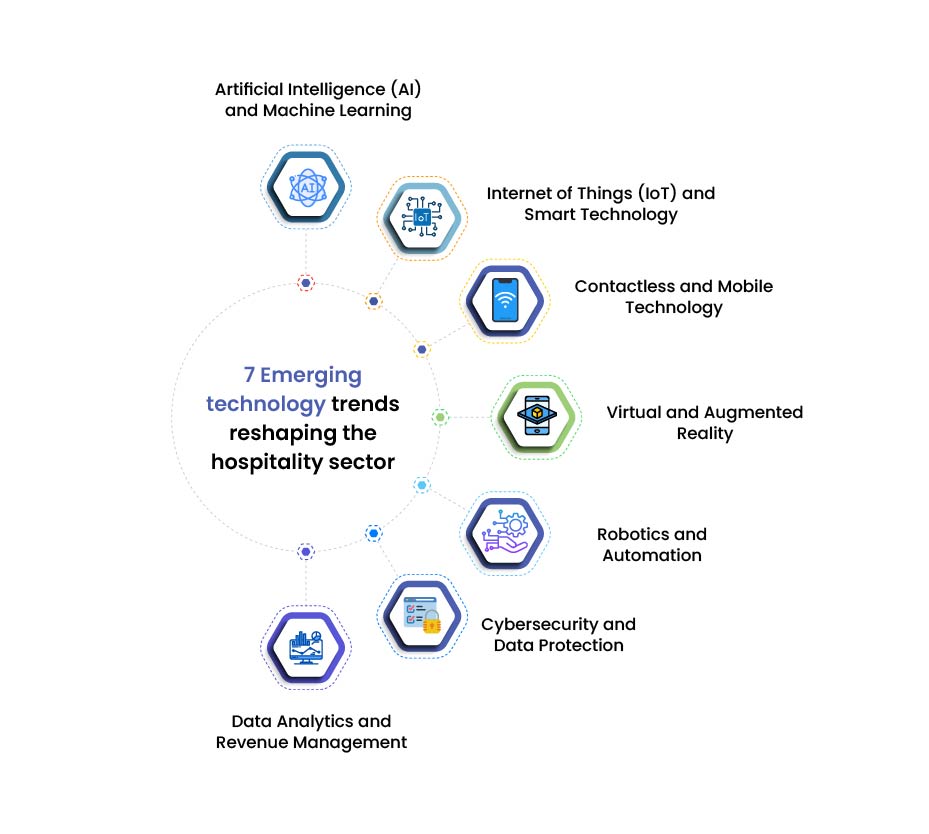
1. Artificial Intelligence (AI) and Machine Learning (ML)
Artificial intelligence is not just confined to creating basic chatbots or automated email replies anymore. In hospitality, AI development has evolved into a powerful tool that can anticipate guest needs before they are even expressed.
The technology delivers better recommendations by analyzing data from previous stays, browsing behavior of guests, and booking patterns. AI-driven systems are proven effective for improving dining, entertainment, and other hotel-related services across the U.S.
For hotel executives, this shift marks the rise of predictive hospitality, where demand forecasting, inventory management, and guest engagement are all informed by real-time analytics.
On the other hand, machine learning algorithms can anticipate booking surges, optimize staffing schedules, and adjust prices dynamically, ensuring higher revenue while enhancing guest satisfaction.
Integrating AI and ML lays the foundation for interface-free hospitality. These technologies can automate processes such as front desk check-ins, eliminating the need for manual input.
With hotel tech solutions, the system can automatically recognize a returning guest, process their check-ins, and configure room preferences without requiring any human intervention. Such innovations are becoming more popular and practical solutions for hotels competing in a technology-first era.
2. Internet of Things (IoT) and Smart Technology
Travelers these days increasingly expect a smooth and customized stay. Internet of Things alongside hotel and travel software development is making that possible through property management system (PMS).
IoT has become one of the most valuable hotel IT solutions because it connects rooms, devices, staff, and guests through a centralized ecosystem, improving both operational efficiency and customer satisfaction.
Smart rooms equipped with connected devices allow guests to control lighting, temperature, curtains, and entertainment systems through a smartphone or voice command. This level of personalization turns an ordinary room into a tailored sanctuary.
Interestingly, the potential of IoT extends well beyond luxury urban hotels. As alternative accommodations such as remote eco-cabins and wellness retreats gain popularity, adaptable IoT solutions are becoming essential.
For instance, guests in off-grid luxury cabins still expect features like climate control, contactless check-in, and personalized services. The challenge for operators lies in deploying robust, flexible IoT systems that function across diverse environments without compromising security or reliability.
With the broadening of guest demographics, IoT has emerged as the bridge between operational efficiency and memorable guest experiences, spanning everything from city skyscrapers to secluded wilderness escapes.
3. Contactless and Mobile Technology
In recent times, the hospitality industry witnesses dramatic shift toward contactless experiences, accelerated both by global health concerns and ongoing labor shortages in the U.S. This is why visitors are no longer surprised by mobile keys or digital check-in kiosks, as they already know what to expect from AI-powered hotel and travel businesses.
Mobile technology is the backbone of modern guest interaction, enabling everything from room selection and service requests to cashless payments.
For hoteliers, this digital-first approach creates a dual advantage, which includes improved operational efficiency and greater guest autonomy.
A guest who books a stay can now check in via a mobile app, unlock their room with a digital key, and order room service without ever standing in line or waiting on staff.
This level of self-sufficiency allows hotels with limited personnel to continue delivering premium experiences while cutting costs.
The rise of staff-lite models in certain hotels, where a digital concierge replaces the traditional front desk.
4. Virtual and Augmented Reality
Marketing in hospitality has always relied on storytelling. Due to modern tech solutions, telling such stories is now more impactful than ever through immersive technology.
Virtual reality (VR) allows potential guests to take a tour of a resort before they book, giving them confidence in their choice and sparking excitement for the stay ahead.
Augmented reality (AR) also enriches the on-site experience of visitors. They can point their phone at a restaurant menu and instantly view ingredient details, allergy warnings, or wine pairings.
Many museums and themed resorts in the US also use AR overlays to add layers of interactivity, transforming an ordinary visit into something unforgettable.
Nowadays, travelers are becoming more adventurous and seek unique accommodations, such as properties with treehouses, glamping pods, underwater suites. VR and AR are critical tools to help hospitality businesses stand out in the competitive market.
The ability to preview the staying experience before booking is now becoming the new standard for hospitality marketing.
4. Robotics and Automation
Labor shortages continue to challenge hospitality providers worldwide, pushing automation to become a strategic necessity for hotel and travel industries. Robots are now stepping into roles that once depended entirely on human staff.
From vacuum robots that clean hallways to delivery robots that bring towels or meals to rooms, automation is now an essential tool for daily operations.
Hotels worldwide are integrating robotics into guest-facing services. They utilize robots to greet guests, answer simple questions, and provide guided tours in properties made for virtual inspections. This approach enhances service reliability, speed, and cost-effectiveness in industries where staffing remains a consistent challenge.
6. Cybersecurity and Data Protection
With greater reliance on digital platforms comes greater vulnerability. Hospitality businesses handle vast amounts of sensitive data, from passport details to credit card information, making them prime targets for cyberattacks. With more hotels integrating IoT devices and cloud-based systems, breaching attempts are likely to grow exponentially.
Modern IT solutions for the hospitality industry now include zero-trust security, cloud monitoring, endpoint protection, and AI-powered threat detection to safeguard sensitive guest information.
Integration of cybersecurity in travel and hospitality software development is now a main objective to earn and retain the trust of guests. Modern hotel owners and CIOs must adopt multi-layered defense strategies, including encryption, two-factor authentication, and real-time threat monitoring.
For CIOs, data protection investments are not just about regulatory compliance but also about safeguarding brand reputation. Even a single incident of breach can undermine the efforts you spend to establish customer loyalty.
7. Data Analytics and Revenue Management
Data collection, analysis, and usage are becoming the defining factor between thriving and struggling hospitality businesses. Advanced analytics allow hotels to tailor promotions to individual preferences, identify upselling opportunities, and implement dynamic pricing strategies that respond to real-time demand.
Many resorts use analytics to recognize that a guest who booked a spa service last year is likely to do so again. The property owner can enhance guest experience and increase revenue by targeting them with a personalized offer at the time of booking.
When combined with AI, analytics systems evolve into powerful engines for precision hospitality, predicting demand surges, adjusting rates on the fly, and ensuring every decision is backed by evidence rather than intuition.

How Hospitality IT Solutions Boost Hotel Performance
Wondering how modern technologies can contribute to flourishing your hospitality business? Below are ways
-
Smarter and personalized stays for guests
According to PwC, 76% of hotel executives prioritize personal experience to retain customers and boost loyalty. Technologies like IoT and AI help hotel and travel businesses to anticipate the needs of guests or visitors with AI-driven insights. Companies can use tech features to personalize services to improve customer experience.
For example, if there are visitors who gave special preferences for room selection or other amenities, AI can help record and recommend these choices during future bookings of hotels or travel packages.
The integration of mobile apps allows guests to use voice commands to control their living environment. This level of customization encourages repeat business and boosts customer satisfaction.
-
Streamlined operations with lower costs
Robotics, automation, and other smart software development help to increase the operational efficiency of businesses. However, not having enough staff remains a common concern in hotels to meet the growing needs of guests.
As reported by the American Hotel & Lodging Association, around 67% of hotels experience staffing shortages. To fill this gap, more than 80% of businesses spend additional money on boosting wages to retain and hire staff.
In the hospitality sector, tech solutions can reduce excessive dependency on human staff for repetitive tasks. Moreover, companies can streamline maintenance through predictive analytics powered by IoT. Hospitality firms can optimize utility costs by utilizing resource-efficient systems. Overall, these savings enable hotel CIOs to focus on problems and invest in areas that need improvement.
-
Staying ahead with a tech-driven edge
Early adoption of the latest technologies is an important aspect for U.S. hospitality firms to gain a competitive edge in the market. It is also a proven and effective strategy to get your business recognized by tech-savvy visitors who value innovation and convenience.
Hotel chains leveraging AI, IoT, and other cutting-edge technologies can easily deliver modernized offerings to clients. This is helpful to grow the customer base and brand reputation. When guests are provided with memorable and novel experiences, it helps your company stand out from competitors.
-
Green innovation for a sustainable future
Sustainability is an essential factor in the hospitality industry. To qualify for Excellence in Designing for Greater Efficiencies (EDGE) certification, buildings must achieve at least 20% savings in energy, water, and embodied carbon compared to a local baseline. This aligns with shifting traveler preferences, as studies show 70% of guests prefer eco-friendly hotels. - Source
Hospitality tech solutions make this possible through smart energy management, IoT-enabled monitoring, and cloud platforms that reduce waste and improve efficiency.
Some US-based hotels also use AI-powered analytics to optimize resources, track carbon footprints, and ensure compliance with green standards. Hospitality businesses not only cut costs but also build trust with eco-conscious travelers by adopting these solutions, paving the way for a sustainable future.
Hospitality software development: What are the challenges
Below are the issues you may face while developing hospitality tech solutions.
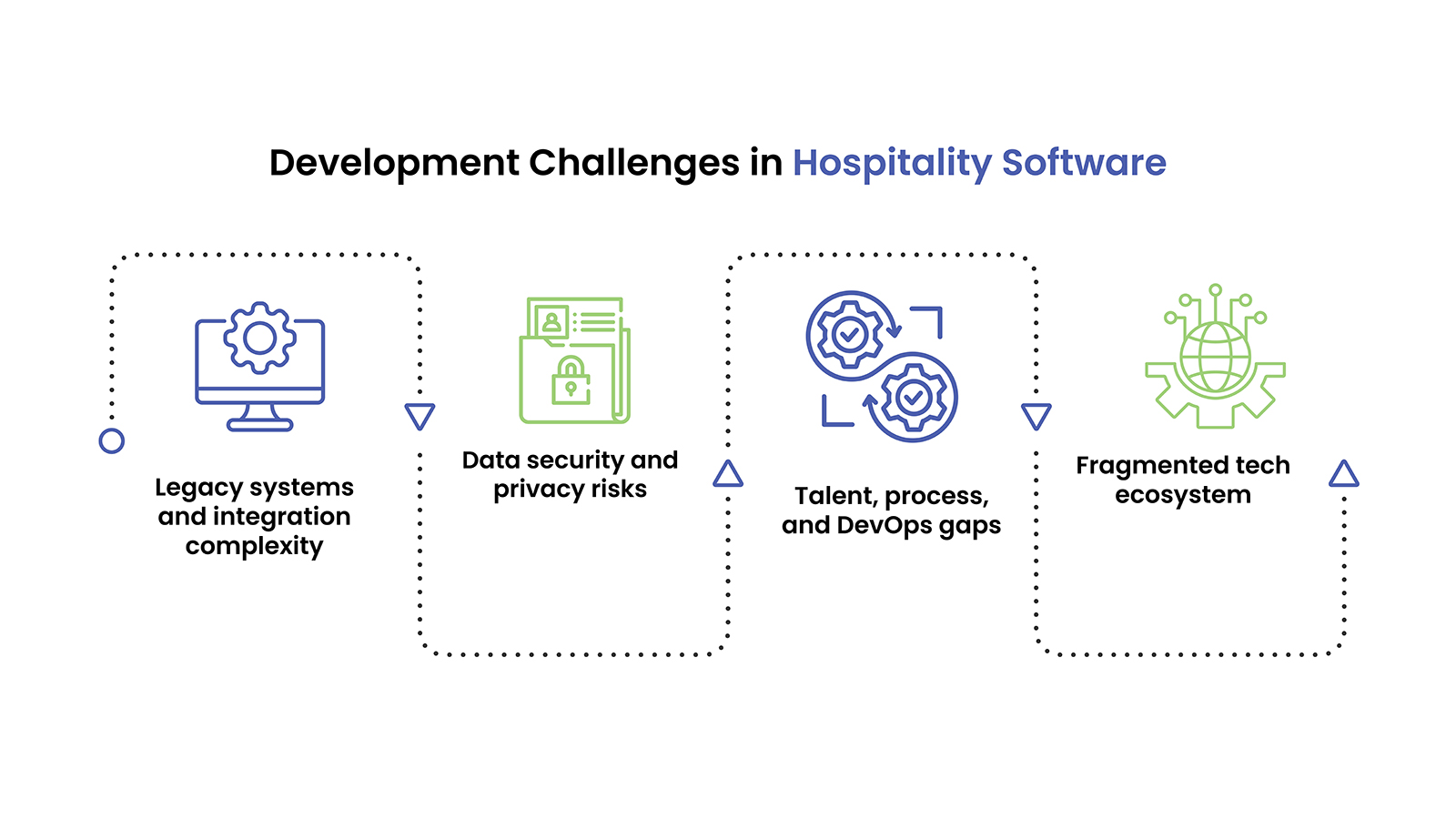
- Legacy systems and integration complexity: Many hotels run outdated PMS and CRS platforms, making modern API-driven integrations costly, slow, and error-prone, delaying innovation and raising maintenance bills.
- Data security and privacy risks: Expanding IoT and cloud adoption widens the possibilities of cyber attacks on hotel applications and websites. Mitigating these risks requires stronger encryption, vendor risk management, and ongoing compliance to safeguard guest data and maintain brand reputation.
- Talent, process, and DevOps gaps: Lack of skilled developers, data scientists, and DevOps engineers slows project delivery. Isolated DevOps and MLOps practices create hurdles, making AI/ML deployment harder and pushing back time-to-market.
- Fragmented tech ecosystem: A crowded vendor ecosystem leaves CIOs juggling many point solutions, causing API mismatches, higher integration costs, and vendor lock-in that block consolidation.
How does offshore hiring help build hotel tech platforms?
In order to build hotel technology platforms from scratch, your business needs skilled technical teams who understand unique challenges of hotel and travel industries. From live booking engines to mobile self-check-in apps, these platforms must combine speed, scalability, and reliability.
Offshore software teams help organizations implement scalable hotel technology solutions while reducing development costs and accelerating product delivery. Whether you're modernizing legacy systems or building new digital platforms, experienced engineers can deliver customized hospitality IT solutions tailored to your business goals.
For many U.S. hospitality companies, relying on an offshore IT staff augmentation agency is the most effective way to achieve this. Here’s why:
-
Access to Diverse Technical Expertise
Partnering with an offshoring agency in the U.S. can give your hotel business a competitive edge. You can hire professionals who specialize in the following:
Backend frameworks: Offshore software development teams often include specialists in Node.js, Go, Java, and .NET. This ensures hotels can select the right backend for their needs, whether it’s lightweight concurrency for booking flows or enterprise-grade scalability for chain-wide operations.
Frontend development: Agencies provide developers skilled in React, Vue, React Native, and Flutter. This expertise helps create seamless guest and staff applications, whether you need to build a digital key app or a web-based booking dashboard.
Databases and analytics: Offshore engineers are well-versed in PostgreSQL, Redis, Elastic, and Snowflake. This enables hotels to handle both transactional workloads and advanced analytics, such as occupancy trends or personalized guest recommendations.
-
Faster Time-to-Market
Offshore teams are trained to work within agile delivery models and CI/CD pipelines. With staff augmentation, hotels can immediately scale teams to accelerate critical features.
You can easily get quick assistance from IT engineers for adding AI-driven guest recommendations or building secure mobile payment gateways. Moreover, 24/7 global collaboration means work progresses round the clock, reducing delays and speeding launches.
-
Cost Efficiency Without Sacrificing Quality
Hospitality firms face high local hiring costs and limited availability of niche talent. Offshore staff augmentation provides access to skilled hotel tech software developers at a fraction of the cost, without compromising standards.
When you approach offshoring firms for travel and hospitality software development, expect them to follow strict quality benchmarks, ensuring code reliability, scalability, and maintainability.
-
Scalability for Growing Hotel Operations
Hospitality platforms are often required to support peak traffic during holiday seasons, conferences, or sudden surges in bookings.
Offshore engineers can implement scalable cloud infrastructures on AWS, Azure, or Google Cloud. Using tools like Kubernetes, they ensure uptime and automated scaling, which ensures that platforms remain responsive under heavy load.
-
Reduced Hiring and Training Burden
Finding developers with experience in hotel technology is difficult in the U.S. Offshore teams comprise pre-vetted engineers with proven expertise in hospitality-specific platforms like self-service kiosks, staff dashboards, and loyalty program systems.
Hotel businesses can save months of recruiting and onboarding time with offshore hiring arrangements. Find out more about the benefits of offshore software development agencies here!
-
Focus on Core Hospitality Goals
U.S. hotel companies can focus on guest experience, brand differentiation, and service innovation by delegating IT development to offshore partners.
Agencies handle technical complexities such as DevOps automation, log management, and error tracking, ensuring platforms stay reliable around the clock.
-
Future-Proofing Hotel Tech Platforms
Offshore engineers bring years of expertise in integrating advanced technologies like AI, ML, and vector databases for personalized guest services. Their knowledge of modern architecture ensures hospitality platforms are flexible, adaptable, and ready for long-term growth.
Hotel companies can build robust technology platforms that keep pace with evolving guest expectations and industry demands by partnering with the right offshore development company in the US.
Conclusion
The hospitality industry continues to evolve rapidly in 2026, with AI, IoT, automation, cybersecurity, and analytics transforming the way hotels operate. Investing in the right IT solutions for the hospitality industry enables hotels to improve operational efficiency, enhance guest satisfaction, strengthen security, and prepare for long-term growth.
Whether you're modernizing legacy systems or implementing new hotel technology solutions, partnering with an experienced software development company helps ensure your digital transformation delivers measurable business value.
Want to embrace these emerging trends for your hotel or travel business? Look no further than Proquantic, your trusted software development agency in the US. With us, you can get reliable and experienced software developers to work on your hospitality projects. Whether you need customized hotel technology solutions, hospitality IT solutions, or end-to-end software development services for your travel or hotel business, schedule a call with our experts.
FAQs About Hospitality Tech Solutions
What technologies power hotel management software?
Modern developers create hotel management software using diverse technology stacks. For back-end development, they choose programming languages like Java, Python, and PHP. They also utilize MySQL, Oracle, and Microsoft SQL Server to manage guests and booking data.
On the front end, they use HTML, CSS, and JavaScript to create interactive and user-friendly web interfaces for guests and staff.
For scalability, hotels rely on cloud providers such as AWS, Azure, and Google Cloud. Mobile apps are created with frameworks like React Native, Flutter, or Xamarin to support iOS and Android.
AI and machine learning both power smart features like dynamic pricing, predictive analytics, and chatbots that improve guest engagement and hotel operations.
How long does it take to build hotel management software?
The timeline for hotel management software development often depends on scope and complexity. For example, building a basic system with essential features may take 4 to 6 months from planning to launch. More advanced platforms with integrations, mobile apps, and AI capabilities can extend the development cycle to 12 months or longer.
Factors like team size, chosen technology stack, and project management methodology also influence delivery time. However, agile methods can speed up iterations, while larger enterprise systems often require phased rollouts.
In what ways does software integration lower hotel chain costs?
Integrating hotel software systems helps businesses cut costs and run leaner operations. When platforms like PMS, CRM, and booking engines connect seamlessly, staff spend less time on manual updates.
Automation reduces errors, prevents overbookings, and keeps inventory accurate across all channels. By saving staff hours and reducing inefficiencies, hotels cut labor expenses while improving service. Integration also helps optimize resources such as energy use, room turnover, and marketing spend, creating long-term savings.
How is social media shaping the hotel industry today?
Social media is a reliable channel for hotel marketing and reputation management. Travelers often rely on reviews, influencer content, and recommendations before booking. Positive feedback can boost a property’s visibility, while negative reviews spread quickly and can damage trust.
Many hospitality firms across the U.S. now use platforms like Instagram, TikTok, and Facebook to showcase experiences, engage directly with guests, and run targeted ad campaigns. Social listening tools also help track guest sentiment and respond in real time.
How does technology improve the guest journey?
Information technology is reshaping the guest's journey at every touchpoint. Mobile apps allow contactless check-ins, digital keys, and real-time service requests.
Data-driven platforms personalize recommendations for dining, activities, or upgrades. In-room smart devices give guests control over lighting, temperature, and entertainment. Together, these innovations create a more personalized, convenient, and enjoyable stay.
Can AI chatbots and automation enhance guest service?
AI-driven chatbots and virtual concierges now handle thousands of guest queries instantly. They answer questions about bookings, amenities, and local attractions 24/7. There are even some advanced chat systems that provide tailored recommendations and alert staff when human support is needed.
Let’s take the example of Marriott International, which is a leading US-based multinational hospitality company operating luxury and midscale hotels worldwide.
Marriott’s Renaissance Hotels introduced RENAI, an AI-powered virtual assistant. It provides guests with personalized recommendations and local insights through mobile access, increasing hospitality experience.
Having access to these tools eases the burden on staff, speeds up response times, and delivers personalized service, improving both guest satisfaction and efficiency.
What are hospitality software solutions that stand out for their functionality & customization?
The most effective hospitality software solutions combine powerful functionality with the flexibility to adapt to different business models. Popular examples include property management systems (PMS), customer relationship management (CRM) platforms, booking engines, revenue management software, housekeeping management systems, point-of-sale (POS) solutions, and guest experience applications.
What makes these solutions stand out is their ability to integrate with existing hotel operations while supporting custom workflows, third-party APIs, cloud infrastructure, and AI-powered automation. Modern hospitality IT solutions also offer scalable architecture, advanced analytics, mobile accessibility, and strong security features, enabling hotels to improve operational efficiency and deliver highly personalized guest experiences.