


Ready to launch a mobile app and take your new business globally? Many startups and established companies have built powerful customer bases by developing their own applications.
According to a recent report, there are nearly 8.93 million mobile apps, and 300+ app stores present globally. You can find apps for literally everything, starting from education to healthcare and gaming to utilities, and more. These numbers highlight the growing popularity of smart apps among users worldwide.
Moreover, the global mobile application development market size is projected to cross USD 460.69 billion by 2030 at a 13.01% CAGR. If you've been planning to launch a mobile app startup, 2026 is an ideal time to turn your idea into reality. Whether you're creating your first product or refining an app startup business plan, success depends on careful planning, market validation, and choosing the right development strategy.
When it comes to custom mobile app development for startups, strategic preparation and setting a clear path forward are essential. Otherwise, your app-based innovations are likely to fail. Nearly 94% of new companies fail because they expand too quickly instead of pacing growth.
Some statistics indicate that 80 to 90% of apps are discontinued from the app stores after a single use. This is a wake-up call for startups to prepare solid strategies for their app businesses to thrive in the competition.
This blog covers what it takes for planning, launching, and sustaining a successful mobile tech company in the U.S. Keep scrolling to explore and avoid common pitfalls that lead to software failure, and build products that dominate app stores.
Build an App Startup Business Plan Before Development
Every successful startup begins with a well-defined app startup business plan. Before writing code, founders should validate their idea, identify their target audience, estimate development costs, define revenue models, and create a realistic product roadmap. A strong business plan helps startups secure funding, reduce risks, and guide smarter development decisions throughout 2026 and beyond.
Kickstart Your Mobile App Startup with these Key Strategies
Hiring experienced mobile app developers for startups is one of the most effective ways to reduce development risks and accelerate product delivery. The roadmap below outlines the essential stages of startup mobile app development.
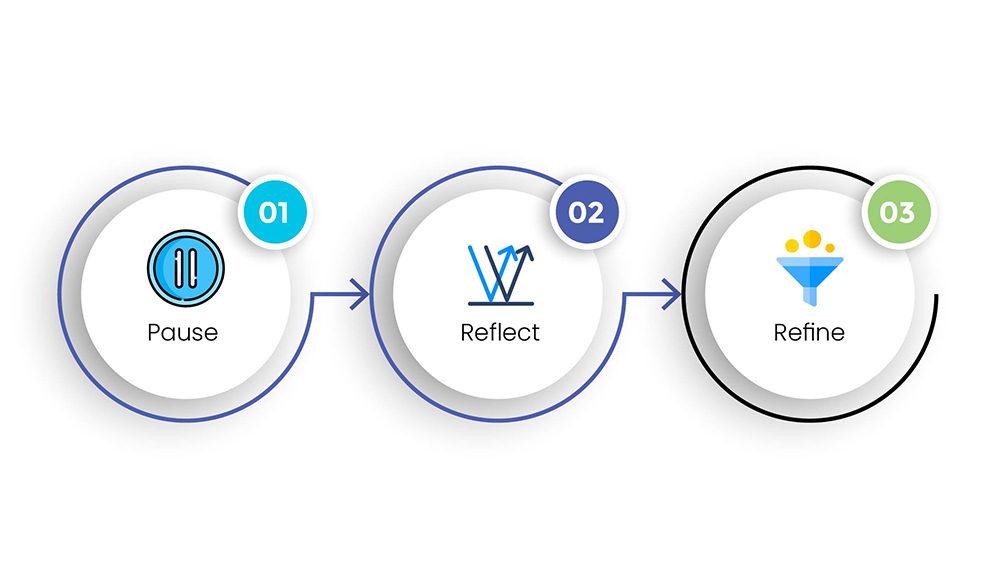
Shape Your Concept: Pause, Reflect, Refine
Before relying on external concepts, always use your own discernment while conceptualizing an app design. You need to brainstorm to prepare a checklist of business ideas that align with mobile software development market trends.
At this stage, your app startup business plan should outline the problem your application solves, your target market, competitive advantages, estimated budget, and long-term growth strategy. This foundation helps startups make informed product and investment decisions before development begins.
The best approach for your app innovation journey is to pay attention to the product and its outcomes. Mobile app development for startups often involves targeting diverse niches such as finance, healthcare, education, hospitality, and real estate. However, some companies focus on a single niche when launching their apps to provide targeted value to their services.
Whichever niche you select for your emerging business, get approval from reliable mobile app developers to understand the market demands. Instead of rushing things, do your own research to discover unique features that make your product stand out.
Dive Deep into Market Research
Before even starting your custom mobile app development for startups, it’s important to understand your target users. In-depth market research on your competitors, their services, and feedback from their customers can help in the long run.

During preliminary research, collect every detail possible about app users based on demographics and engagement level. If the audience is interested in any specific niche, it’s your clue to start exploring the application development process.
Competitor analysis is also a powerful strategy to understand the strengths and weaknesses of the application software. Alongside determining market gaps, you must also conduct SWOT analysis, surveys, and identify buyer behavior shifts.
For market research, check out Google Trends, Statista, eMarketer, and similar knowledge-sharing platforms. Going through these insights can help better strategize mobile app development for startups.
Pick the Perfect Platform
As forecasted by some market experts, revenue on Google Play and Apple App Store platforms is projected to reach US$72 billion and US$161 billion, respectively, by 2026. These estimates are likely to increase further, with new mobile apps joining the current market size.

Now, your selection of the app launch platform plays an important role in the development process. Depending on the choice of app store, several other factors are considered. These include geographic dominance, monetization strategies, and expenses for mobile app development for startups.
Some startups prefer to launch their custom mobile app development on both andrioid and IOS devices through a cross-platform approach. This allows them to acquire more users for their businesses. However, from a development viewpoint, it may require additional technical requirements, timelines, and maintenance costs for successfully deploying an app.
It’s better to schedule a consultation with experts who specialize in mobile app development for startups. Find a trusted agency that recommends the appropriate platforms to release the software. Working with them allows businesses to build high-performance applications for any platform.
Experienced mobile app developers for startups can also recommend whether native, hybrid, or cross-platform development best aligns with your business goals, target audience, timeline, and budget. Their technical guidance helps founders avoid costly mistakes during product development.
Craft an Irresistible UI/UX
An app’s impeccable design is one of the main elements that make it appealing to users. For creating an attention-grabbing application, you must focus on the user interface (UI) or user experience (UX) design elements. Custom mobile app development for startups often incorporates established UI patterns and visual hierarchy to deliver engaging user experiences.
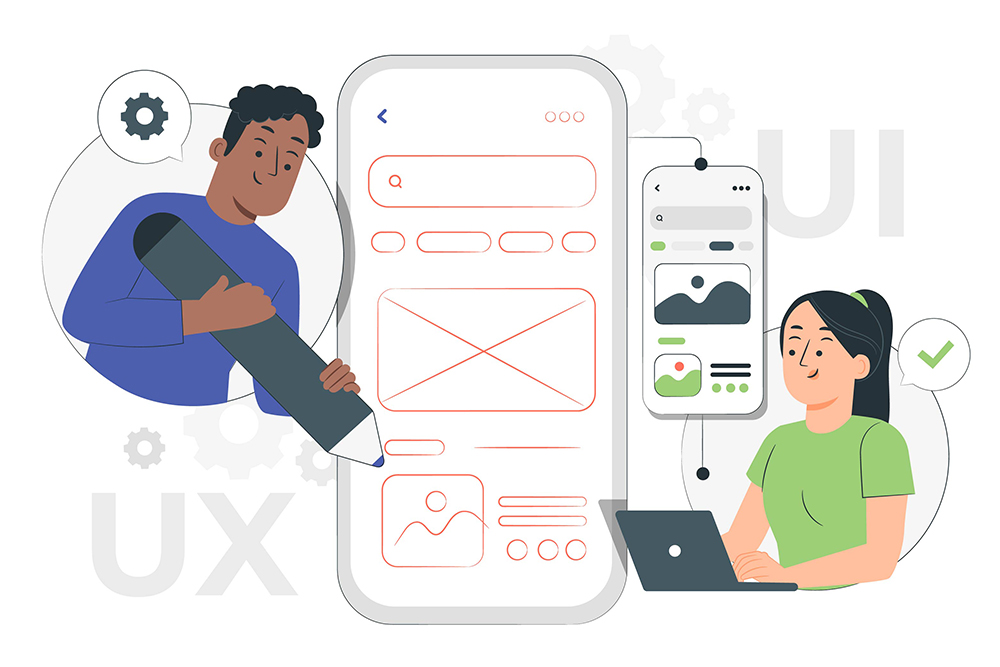
Your application must feature an intuitive design alongside eye-catching appeal and alignment with business goals. Create a product that is user-friendly and functional to continue to meet Apple’s Human Interface Guidelines and Google Material Design standards. To achieve this target, launch a minimum viable product (MVP) of your app and collect user feedback about its interface and performance. Don’t rush to incorporate all the elements at once; take time to discover the most irresistible UI/UX design approach.
Once the final features are approved, this is when you can begin your journey as a mobile app development company. Remember, your users may not return after having a negative mobile app experience. However, you can retain customers by providing regular performance updates, enabling intuitive navigation, and delivering responsive customer support.
Moreover, integrating personalized features and push notifications into mobile app development for startups can increase engagement. In fact, studies show that apps with effective onboarding and seamless navigation see up to 60% higher retention rates.
Build Your Product with Precision
Evaluating your competitors and target audience is essential to understanding the market situation. If you have already conceptualized an MVP, put all your efforts behind creating precise mobile software. You can utilize agile methodologies and design a user-friendly and intuitive UI/UX to ensure the product includes all essential features. Partnering with experienced mobile app developers for startups helps reduce development costs, improve code quality, and accelerate delivery. Instead of managing every technical challenge internally, founders can focus on business growth while experienced development teams build scalable software.
Moreover, building your mobile app with precision ensures features are aligned with user needs and business goals. Don't just overload your product with unnecessary features. Instead, focus on core functionalities that deliver real value through the software. A precise approach reduces development costs, minimizes errors, and improves user experience. This strategy allows startups to launch faster, validate ideas effectively, and scale with confidence in a competitive market.
Successful startup mobile app development is about more than writing code. It requires continuous validation, user feedback, agile development practices, and a clear product roadmap to ensure the application evolves alongside changing market demands.
Explore Funding Opportunities
Starting your own business means arranging for proper funding opportunities alongside self-financing and bootstrapping. To generate funds after mobile app development for startups, you can explore venture capital firms, angel investors, tech-savvy stakeholders, and friends and family members.
Some other options include taking help from different funding platforms and participating in startup incubators and accelerators. You may even utilize government grants and various loan facilities to fund your mobile app-based business.
A powerful way to attract potential investors is by showcasing a clear, working demonstration of your app. Focus on building a product that is scalable, innovative, and compelling, which aligns with current market demand. This not only highlights your vision but also proves your startup’s potential for growth and long-term success.
Strategize Your Marketing Plan
Mobile app development for startups lays the foundation for business, but is not sufficient to acquire more customers or investors. You need to prepare a winning app marketing plan that can define your objectives and predict outcomes. For planning, you can utilize tools or approaches that allow extensive competitor analysis and market research.

Startups often create a pre-launch buzz with various resources like social media teasers, landing pages, and partnering with influencers. However, before this stage, they usually use the SMART (specific, measurable, achievable, realistic, and timely) framework to set unique business goals.
Many agencies recommend app store optimization (ASO) during custom mobile app development for startups for better online visibility. Pairing it further with email outreach content, paid ads, or other targeted campaigns can maximize user reach.
Social media marketing is a powerful strategy to bring your brand into the limelight. Creating profiles on Instagram, Facebook, X, or other popular platforms helps startups connect with users interested in their products.
Regardless of your strategies for an impactful marketing plan, track metrics uninterruptedly to ensure the viral success of your startup app. This step is important to enhance credibility and generate steady user adoption for your business.
Set a Clear Monetization Strategy
Setting a one-time fee to download the app or access its exclusive features is a simple monetization strategy. It is a great way to start a revenue stream through mobile app development for startups. Let’s discuss the strategies that can impact your business and generate income.
In-app Purchases
Allow users to buy virtual products, premium features, or exclusive content directly within your app. This model can help firms generate high revenue, especially through gaming and lifestyle apps. However, success depends on offering meaningful and engaging products that enhance user experience without disrupting app usage.
Advertising
Display targeted ads within your app to create a steady income stream. Prioritize user experience by keeping ads relevant, non-intrusive, and well-integrated. Effective placement of advertisements can generate consistent revenue while maintaining user satisfaction and engagement, especially in apps with high daily active users.
Sponsorship
Partner with different brands to feature their products or services within your app. Sponsorship deals can be highly profitable but require strategic relationship-building and alignment with the interests of your audience. This approach works well during mobile app development for startups following a strong niche or having loyal user base.
Subscriptions
Offer recurring access to premium content, services, or features. Subscription models encourage long-term engagement and predictable revenue, particularly for apps that deliver ongoing value like fitness, education, or productivity tools. For many startups, providing continuous benefits through mobile applications is key to sustaining subscriber retention.
Pay-per-Download
Charge users a one-time fee to download your app. This ensures immediate revenue but may limit adoption, so it works best for niche, high-value, or specialized apps. A strong value proposition and clear benefits are essential to justify the upfront cost to potential users.
Apart from these monetization tactics, several other ways are there to ensure financial stability of your startup. You just need to evaluate user preferences through market research to identify the best approach to monetize your app. For long-term business growth and financial success, consult with a company having experience in custom mobile app development for startups.
Update, Optimize, and Improve
Developers consistently monitor user feedback and app analytics to identify pain points of customers. They do this to update, optimize, and improve a mobile app post-launch, which also helps them to discover opportunities that integrate other trending features.
In mobile app development for startups, the development team is responsible for releasing regular updates to fix bugs and improve performance. They also ensure the app's compatibility with new operating systems and devices while adding features that keep the product engaging and competitive.
Enhance app performance by minimizing launch times, compressing assets, and efficiently managing background tasks to improve user experience and conserve battery life. Furthermore, boost visibility with App Store Optimization (ASO) and strategic marketing to attract new users while keeping existing users informed with timely updates.
Implement a Smart Retention Plan
Do you know what makes users uninstall or abandon your app after installation? The reasons could be different, ranging from frequent crashes to poor user interface. Tracking all app-related feedback is essential for shaping better strategies in mobile app development for startups.
To engage customers and retain them for the long term, here are a few things to try out.
Perfect Your Notification: Timing Schedule push notifications thoughtfully to respect time and attention of users. Sending them frequent reminders or prompts can lead to app abandonment.
Moreover, you can boost interaction, retention, and user satisfaction while keeping notifications meaningful and welcomed. For this, try to analyze engagement patterns of users and send alerts when they are most receptive.
Be Transparent About Permissions: Clearly explain the purpose behind requesting specific permissions and how the business will handle user data. Transparency builds trust, reduces privacy concerns, and fosters a positive brand reputation during mobile app development for startups.
Users mostly prefer to engage with mobile apps that prioritize privacy and clearly communicate how their data is collected and used.
Emphasize Necessary Updates: Limit app updates to essential improvements, bug fixes, or feature enhancements to retain users. Remember, providing unnecessary updates can frustrate them, consume storage, and lead to negative business reviews.
A thoughtful update strategy maintains app stability, enhances user experience, and ensures the startup app evolves without overwhelming its audience.
Personalize User Experience: Tailor content, notifications, and app interfaces to individual user preferences and behaviors. Personalization during mobile app development for startups increases engagement, encourages frequent use of application, and improves retention.
However, startup owners need to understand user habits and interests. This helps them build apps that feel intuitive, rewarding, and uniquely suited to each user.
Deliver Continuous Value: Keep your app engaging by regularly rolling out meaningful features, content, and improvements. Providing continuous value encourages users to return, boosts engagement, and establishes your app as a dependable, evolving solution.
Consistent enhancements reflect your commitment to user satisfaction and help sustain long-term growth in a competitive app market.
How Much is the Mobile App Development Cost for a Startup?
When it comes to brainstorming ideas for custom mobile app development for startups, cost becomes an important decision-making factor. Startups often take the time to analyze these factors before building unique apps that align to their core features.
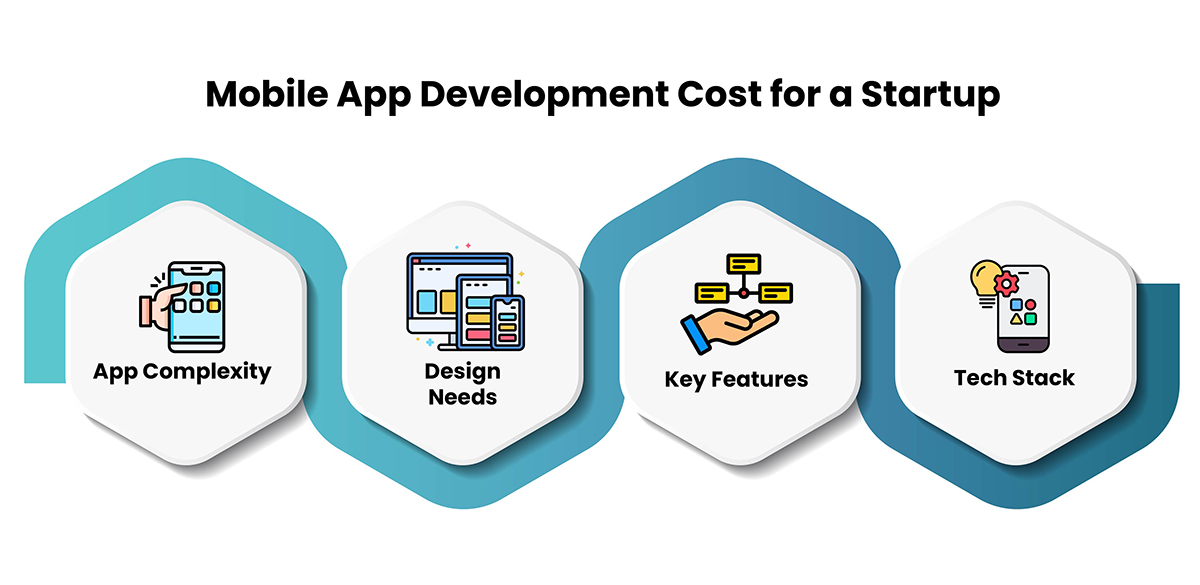
Below are some elements that help companies plan their investment on mobile app startup.
The overall investment largely depends on your app startup business plan, feature requirements, technology stack, development approach, and whether you choose an in-house team or experienced mobile app developers for startups.
App Complexity
The complexity of the app is one of the strongest factors that drives cost. A basic application with simple functionality, limited screens, and minimal backend requirements can range from $30,000 to $100,000. In mobile app development for startups, basic features serve straightforward purposes such as delivering information or supporting basic user interactions.
Now, if your app has medium complexity, such as multiple integrations, custom user interfaces, and a functional backend, the development cost can usually fall between $100,000 and $250,000.
Similarly, for complex apps with AI, real-time features, advanced security, or large-scale data processing can exceed $250,000 due to the scale of development required.
Design Needs
UI/UX design is an important aspect of mobile app development for startups. It decides how users interact with your app. If you want a clean and simple interface, it requires fewer design resources,
However, apps with tailored branding, animations, or highly interactive layouts demand more investment. Since user experience plays a direct role in retention, thoughtful interface design is often worth the additional expenses.
Key Features
If more features are included, more time and cost are involved in mobile app development for startups. Essential features like login, push notifications, and basic navigation add limited overhead.
On the other hand, if your startup wants to focus on advanced capabilities such as real-time chat, AI-powered recommendations, or third-party API integrations, these features require greater effort. Apps with smooth functionality and scalability also add to overall expenses.
Developers now optimize apps to be perceivable, operable, understandable, and robust, while integrating assistive technologies. Adding these features ensures that the app’s interface components can be accessed by all users, with or without disabilities.
Remember, including accessibility features significantly influence the expense for custom mobile app development for startups. Moreover, ensuring compliance of the application with ADA and WCAG requires additional design, coding, and testing.
Tech Stack
The choice of technology stack, which includes programming languages, frameworks, and databases, shapes both efficiency and cost. Native app development, using Swift or Kotlin, is typically more expensive since separate teams and codebases are required for iOS and Android.
On the other hand, cross-platform frameworks like Flutter or React Native allow a single codebase for multiple platforms, reducing time and costs. However, there are some advanced native features that may be harder to implement. In such cases, you should hire an agency with years of experience in mobile app development for startups.
Costs also rise when startups demand complex features such as real-time messaging, payment integrations, augmented reality, or machine learning. While third-party SDKs offer cost savings, building these components from scratch increases both development time and budget.
Sometimes, backend infrastructure choices, such as Firebase, AWS, or Google Cloud, affect scalability and ongoing expenses, especially when startups grow their user bases.
Some platform-specific challenges like Android’s device fragmentation can drive costs higher. Choosing tech stack carefully not only saves resources but also ensures faster delivery, making it essential for companies balancing innovation with budget.
Startup Mobile App Development Challenges and Solutions
Startups navigating iOS or Android app development can face several challenges. With the intervention of expert Android, iOS, or hybrid app developers, overcoming these problems may not be easier. For sustainable business growth and successful mobile app development for startups, the following strategies are effective:
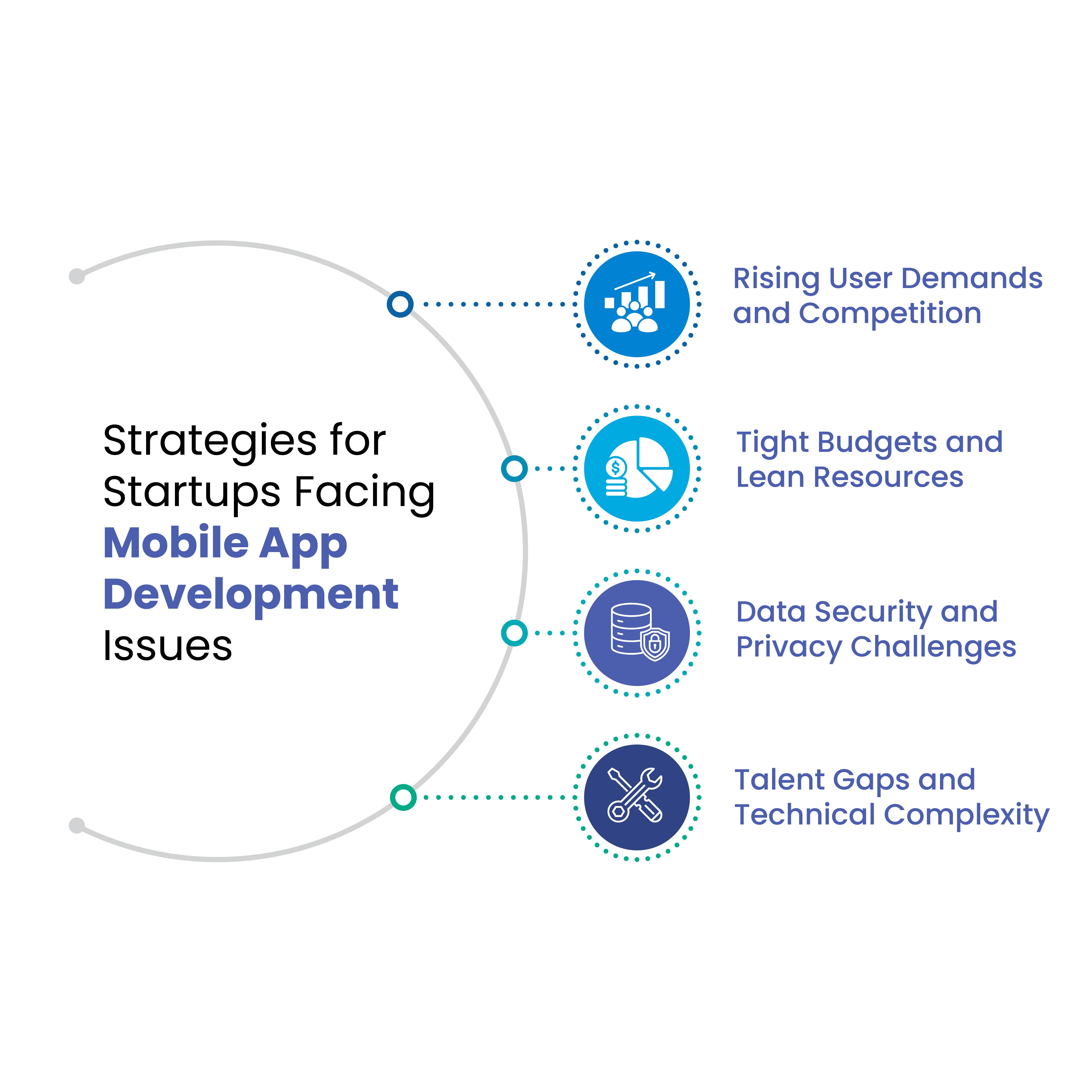
Rising User Demands and Competition
The mobile app market is crowded, and users now expect flawless design, fast performance, and personalized experiences. Startups often struggle to stand out and match these rising expectations.
To stay competitive, conducting market research, identifying unmet needs, and leveraging user feedback through beta testing can help deliver value-driven and unique applications.
Tight Budgets and Lean Resources
Many emerging companies operate with limited funding. This restricts their ability to hire top-tier developers for app development, invest in advanced tools, or run large-scale marketing campaigns.
Startups with limited funds can simply build an MVP to focus on essential features first to attract stakeholders. They can also explore crowdfunding, accelerators, or grants to secure additional monetary support for mobile app development for startups. These practices can help businesses keep their operations lean and cost-effective.
Data Security and Privacy Challenges
User trust is easily lost when security flaws arise. Startups must adopt robust security measures, including encryption, secure authentication, and regular vulnerability testing.
Compliance with standards such as GDPR or HIPAA builds credibility while safeguarding sensitive data. Strong privacy practices not only reduce legal risks but also enhance brand reputation.
Talent Gaps and Technical Complexity
Developing scalable apps requires expertise in technology stacks, cross-platform compatibility, and backend infrastructure. Startups with limited in-house skills may struggle with these complexities.
Collaborating with an offshore agency specializing in custom mobile app development for startups helps bridge the talent gap effectively. Encouraging continuous training within the team also ensures new enterprises remain adaptable to evolving technologies.
Bring Your Startup Idea to the App Store with Proquantic
Launching your business’s mobile app needs careful evaluation of the market, competitors, user expectations, budget, and much more. With these strategies discussed above, you can easily grab the attention of the right customers for your startup. However, avoid the mistakes other companies make to keep your app thriving in the market.
It’s better to know how users prefer to interact with apps before crafting an innovative app for your brand. Doing so gives you the confidence and opportunity for resource planning for successful mobile software deployment and launch.
Are you looking for a trusted agency to help you begin your business with top-tier mobile app development? Your search for a reputable partner offering custom mobile app development for startups ends with us. At Proquantic, we assess market competitiveness, startup goals, and target audiences to deliver high-quality apps.
Let's take the example of First Responder Protective Services (FRPS). It is a US-based company offering private sector security services. They approached our developers for unifying location-based security services and streamlining operations.
We delivered a custom software solution and worked on cross-platform mobile applications using .NET MAUI. Our developers helped FRPS improve emergency response, customer service, and overall technology adoption.
With a scalable platform, the company optimized service delivery and met the needs of diverse clients. This led to a 33% increase in market penetration and a significant expansion of their customer base.
A successful app startup business plan, combined with experienced mobile app developers for startups, creates a strong foundation for long-term business growth. Whether you're validating an MVP or building a full-scale product, following proven startup mobile app development strategies can help reduce risks, improve user adoption, and accelerate your journey from idea to launch.
Connect with our startup app development company today to discuss your business idea. We are just one call away from you!
FAQs on Custom Mobile App Development for Startups
1. What is custom mobile app development?
Customized mobile app development for startups involves designing, building, and deploying apps tailored to different workflows, objectives, and user needs.
Unlike generic solutions, custom apps are created from the ground up, allowing businesses to implement precise functionality, optimize performance, and integrate seamlessly with existing systems.
These apps can be developed as native (such as iOS/Swift or Android/Kotlin), hybrid (like React Native, Flutter), or web-based solutions, depending on platform requirements and target audiences. The process includes backend architecture setup, API integration, database management, and frontend UI/UX design.
When built on a unified enterprise development platform, custom apps feature built-in security, reusable UI components, user management tools, and scalable architecture. This approach ensures maintainable, high-performance solutions that evolve with business needs while minimizing technical debt and complexity.
2. What are the main stages of app development?
Wondering about the process involved in custom mobile app development for startups? Let’s discuss seven essential stages, each crucial for creating a successful business application.
- Idea Generation: This initial phase involves brainstorming and defining the purpose, target audience, and core problem the app will solve. Thorough market research helps validate the idea against competitors and user needs.
- Planning: Once the concept is clear, planning determines the features, technology stack, timeline, and budget of the mobile software. Having a detailed roadmap reduces risks and ensures alignment with business goals.
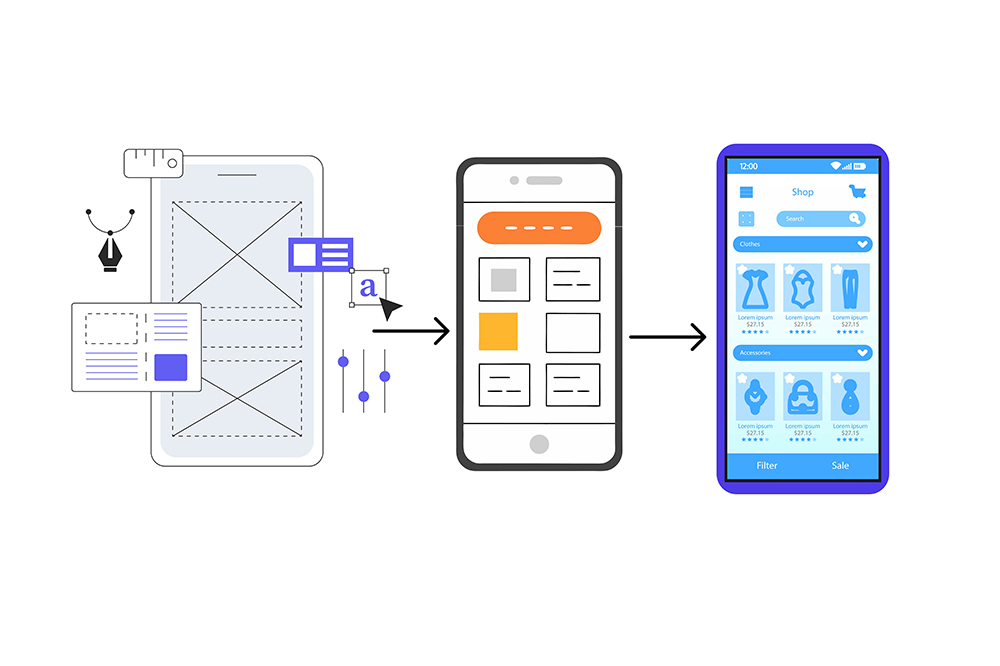
- UX/UI Design: Designers create wireframes, mockups, and prototypes, focusing on intuitive navigation, visual appeal, and overall user experience. The goal is to make the app engaging and user-friendly.
- Development: This stage of mobile app development for startups covers frontend, backend, and API integration. Developers write the code, implement features, and ensure the app functions smoothly across devices and platforms.
- Testing: Comprehensive testing of functional, performance, usability, and security ensures the app is bug-free, reliable, and ready for launch.
- Launch: The mobile software is deployed to app stores with a marketing strategy to reach the target audience. To ensure that the launches are done successfully, many startups opt for professional app developers.
- Post-Launch Maintenance: Continuous updates, performance monitoring, and user feedback integration keep the app relevant and scalable.
3. How many types of app development are there?
When it comes to custom mobile app development for startups, the following types are available:
- Native Apps: Developed specifically for a single platform (iOS or Android) using platform-specific languages like Swift or Kotlin. They offer optimal performance and user experience.
- Hybrid Apps: Built using web technologies (HTML, CSS, JavaScript) and wrapped in a native container. They can run on multiple platforms but may not deliver the same performance as native apps.
- Web Apps: Accessed through a web browser and are not installed on a device. They are platform-independent but rely heavily on internet connectivity.
4. How do you monetize a mobile app?
Below are some ways to generate revenue through mobile app development for startups.
- In-app purchases (IAPs): Users can buy digital goods, additional features, or premium content directly within the app. IAPs create a flexible revenue stream by offering optional enhancements while keeping the core app free.
- Subscription models: Apps can charge users a recurring fee, weekly, monthly, or yearly, for access to premium features, exclusive content, or enhanced functionality. Subscriptions provide predictable, long-term revenue and higher customer lifetime value.
- Freemium model: Basic features are offered for free, encouraging wide adoption, while advanced capabilities, add-ons, or ad-free experiences are available for purchase. This model balances user acquisition with monetization potential while ensuring success with mobile app development for startups.
- Paid app downloads: Users pay a one-time fee to download the app from app stores. This model works best for highly specialized or premium apps with clear value propositions.
- Several other monetization options are also available for mobile app startups. They can generate income from affiliate marketing, sponsorships, or charging transaction fees for services. Combining multiple strategies often helps these companies maximize revenue and target different user segments effectively.
5. What are the benefits of developing apps for a startup business?
Custom mobile app development for startups offers several benefits, which include the following:
- Quick market access: With billions of smartphone users globally, a mobile app provides startups with access to a large pool of audience, which helps further with business expansion.
- Enhanced customer engagement: Features like push notifications and in-app messaging enable startups to interact directly with customers, fostering loyalty and increasing retention.
- Better brand recognition: Having an app increases a startup's visibility on users' devices, strengthening brand presence and recognition
- Competitive advantage: Having a mobile application can set a company apart from competitors relying solely on traditional marketing channels.
6. Which tools are best for cross-platform mobile app development?
When it comes to mobile app development for startups interested in cross-platform products, several tools are available. The choice of tool depends on the specific requirements and goals of the startup.
- React Native: It allows developers to write code once and deploy it on both iOS and Android, reducing development time and costs.
- Flutter: This tool uses a single codebase to offer a rich set of pre-designed widgets and tools to build natively compiled applications for mobile, web, and desktop.
- Ionic: Provides a library of mobile-optimized UI components and tools for building high-quality mobile and desktop apps using web technologies.
- Xamarin: Enables developers to use .NET and C# for Android and iOS app development, sharing code across platforms.
- Unity: Primarily used for game development, Unity allows deployment on multiple platforms, including mobile, with a single codebase.
To know which tools are necessary for custom mobile app development for startups or to streamline projects, contact Proquantic.
Also read adoption of AI in healthcare industry, and Ai in banking.