


In this era of digital transformation, there is a growing demand for cashless transactions across the globe. With the world already embracing e-wallet applications, sending and receiving money is easier than ever before
Digital payment platforms allow users to store and transact money conveniently and safely. According to Grand View Research, global e-wallet market size will reach USD 51.53 billion by 2030 at an 8.5% CAGR.
However, a recent industry analysis suggests that around 75% of financial startups experience regulatory challenges, impacting the functionality and growth.
Many US companies invest in digital wallet businesses to generate revenue and offer a fast, convenient, and secure payment solution. Without strong compliance strategies, there can be issues with e-wallets, ranging from financial fraud to a permanent ban on popular app stores.
If you own a fintech firm and are planning e-wallet application development, understanding security, compliance, and regulatory requirements is essential. Building a secure digital payment platform requires more than just seamless transactions—it demands a security-first development approach that protects users and meets financial regulations.
Build a scalable, compliant, and fraud-proof digital wallet for seamless transactions and user trust.
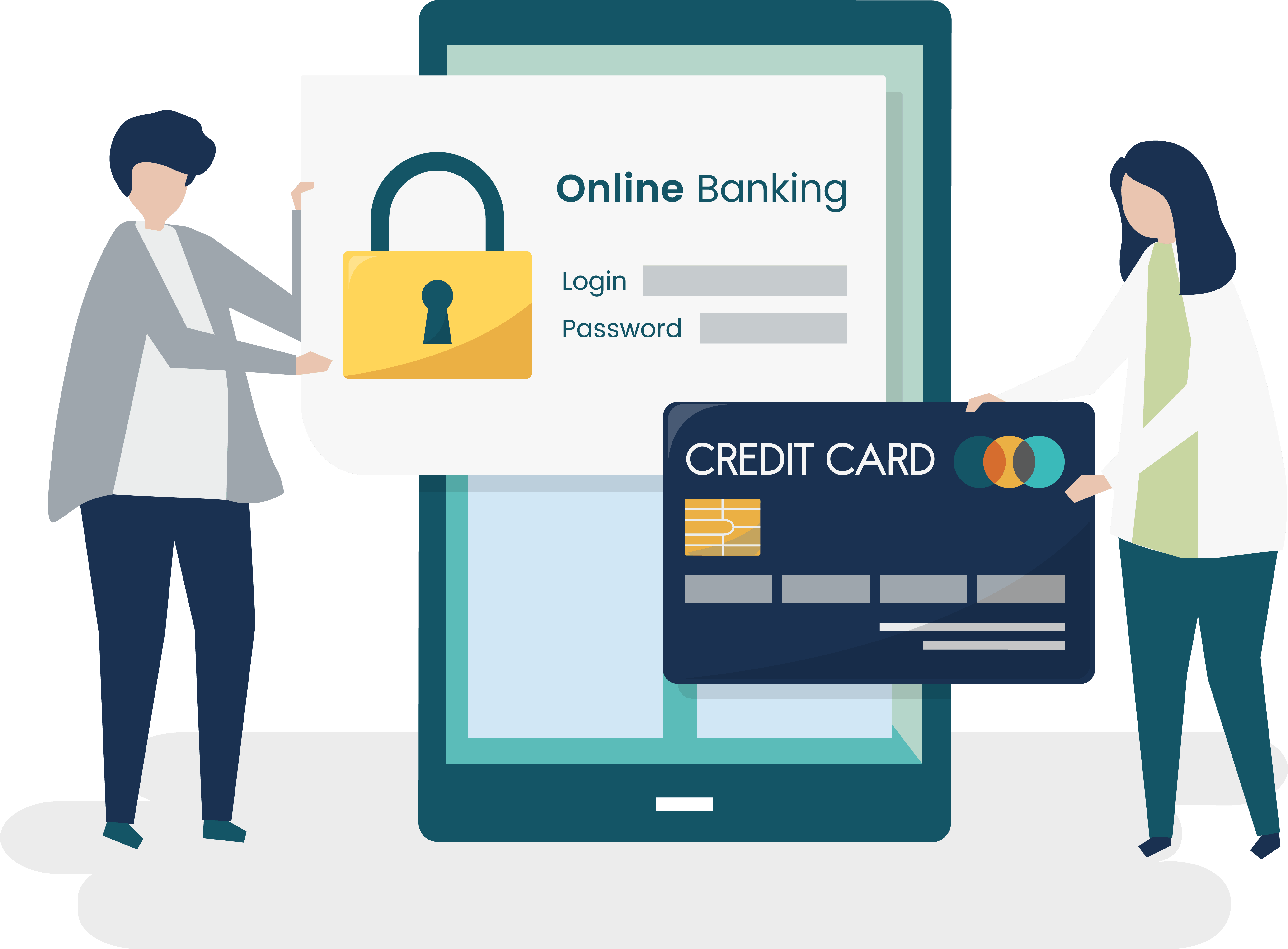
Why E-Wallet Application Development Requires a Security-First Approach
Successful e-wallet application development involves much more than creating a payment interface. Developers must design secure authentication systems, implement data encryption, comply with financial regulations, and build scalable infrastructure capable of handling high transaction volumes. A security-first approach protects users while helping fintech businesses establish trust and long-term growth.
What is an e-wallet application?
E-wallets or fintech applications offer a frictionless purchasing experience to users. These wallet applications combine both data and software, allowing customers to carry out successful transactions.
Digital payment systems use near-field communication (NFC) technology for close-range payments, which also supports tap-to-pay transactions at physical stores. With e-wallet apps, users can easily process remote transactions.
Fintech wallets work just like your physical wallets that users can carry along everywhere but virtually. From loyalty cards to debit and credit cards and digital coupons, digital payments contain various features to enhance customer experience.
Customers don’t need to memorize individual passwords while using cashless payment systems. Modern e-wallet application development focuses on creating secure digital payment platforms that support peer-to-peer transfers, bill payments, contactless transactions, loyalty programs, and personalized financial services.
Why is securing your digital wallet crucial?
Digital wallets are no longer optional but essential tools for managing daily financial transactions. Securing the payment platform is important for users and fintech businesses that seek long-term growth.
Below are the reasons why you must secure your e-wallet application:
-
Protect business reputation
A secure wallet directly reflects a company’s credibility. Customers quickly lose trust if their funds or personal details are exposed. Strong protection is an important aspect for your fintech product to be recognized as reliable, which strengthens its overall reputation.
-
Build lasting user trust
Trust is the foundation of customer retention in fintech. When users feel confident that their money and sensitive data are well-guarded, they are more likely to continue using your platform and recommend others to try it out.
-
Meet industry standards
Financial platforms must comply with strict regulations that prioritize user safety and privacy. Robust security measures not only meet these legal obligations but also position your app as a serious player in the competitive fintech environment.
-
Safeguard revenue channels
Digital wallets often handle millions of transactions. A single breach could disrupt revenue streams and damage growth opportunities. Effective security measures protects payment gateways against fraud, ensuring steady cash flow and attracting both customers and investors.
-
Prepare ahead for future risks
Cyber threats evolve constantly, and fintech enterprises must adapt to stay ahead. A future-ready wallet prioritizes continuous upgrades in security, ensuring it can handle tomorrow’s challenges while staying competitive in the digital economy.
Digital wallet security: Features that matter
Digital wallets have become essential for fast, convenient, and cashless transactions. However, with the increasing adoption rate, these applications grab the attention from fraudsters and cybercriminals.
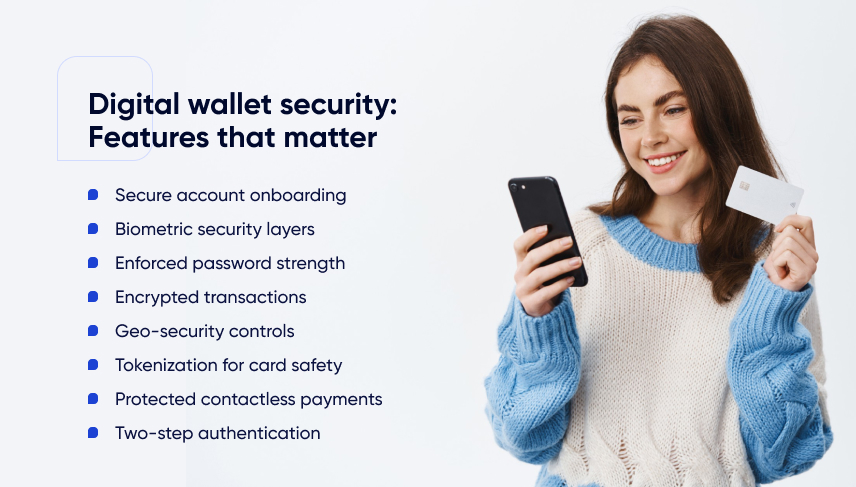
The safety of a wallet app depends on the strength of its built-in features, which must secure both the user experience and the underlying financial infrastructure. Learn about the features and cost of e-wallet app development.
Below are the most critical features that ensure reliable and foolproof wallet security.
1. Secure account onboarding
The very first step in digital wallet safety is user verification. A secure sign-up and login process ensures that only authentic users gain access to payment applications.
Moreover, identity verification tools, such as document scanning or OTP-based validation, help minimize fake account creation and fraudulent access.
2. Biometric security layers
Biometric authentication, like facial scans or fingerprint sensors, offers a fast yet highly secure unlocking method for the wallet. The markers used here cannot be easily stolen or guessed, which is quite common with passwords. This feature makes biometric login process a robust protective layer.
3. Enforced password strength
While biometrics are powerful, passwords still remain a key defense. Digital wallets must enforce strong password policies, rejecting weak or predictable combinations. Encouraging frequent password updates further enhances security resilience.
4. Encrypted transactions
End-to-end encryption ensures sensitive data remains unreadable during transmission. Whether transferring money, storing card details, or processing payments, encryption guarantees that intercepted data cannot be exploited.
5. Geo-security controls
Geofencing allows wallets to track user locations and validate transaction origins. If activity occurs in a region far from the user’s usual location, the app can request additional verification or block the breach attempts right away.
6. Tokenization for card safety
Tokenization replaces sensitive card details with random tokens, ensuring merchants and intermediaries never access actual payment information. Even if breached, tokens carry no real value, making this an essential protective feature.
7. Protected contactless payments
The feature of NFC allows quick and convenient tap-and-go payments. With built-in encryption, these transactions are faster and safer than traditional card swipes. With NFC-enabled payment systems, fintech firms can reduce incidents like physical fraud and skimming.
8. Two-step authentication
Adding an extra authentication feature, such as OTPs, security codes, or biometric confirmation, creates an additional protection layer. Even after compromising a password, unauthorized access becomes nearly impossible.
When combined, these features create a multi-layered defense system that protects users, complies with regulations, and builds lasting confidence in digital payment platforms. For fintech providers, prioritizing these measures is not optional but essential for long-term growth and trust.
Compliance Checklist for Secure E-Wallet Application Development
Launching an e-Wallet application is not only about creating seamless payments anymore. You need to be equally invested in building a platform that meets strict financial regulations worldwide. Compliance ensures user trust, prevents penalties, and enables custom fintech software or app to operate legally across markets.
Here is a practical compliance checklist that financial businesses should prioritize when developing secure digital wallet platforms.
Every e-wallet application development project should incorporate compliance planning from the earliest design stages to reduce legal risks, improve security, and simplify regulatory approvals.
-
Map applicable jurisdictions
In the United States, financial regulations are governed by multiple federal and state-level authorities. Some agencies like the Federal Trade Commission (FTC), the Consumer Financial Protection Bureau (CFPB), and the Office of the Comptroller of the Currency (OCC) take care of compliance requirements for digital payment solutions.
Unlike the European Union’s PSD2, the U.S. regulatory framework is more fragmented, making it essential for businesses to carefully identify which laws apply to their operations. Understanding these requirements is the first step to developing compliance strategies that align with both federal and state regulations.
-
Strengthen KYC procedures
Know your customer (KYC) is central to preventing fraud and identity misuse. Wallet providers must gather valid identification, proof of residence, and sometimes financial activity details. Robust KYC processes, guided by recommendations from the financial action task force (FATF), also help with early detection and flagging of high-risk users.
-
Embed AML safeguards
Anti-Money Laundering (AML) obligations are essential for reducing criminal activity. Regulations such as the U.S. Bank Secrecy Act (BSA) require businesses to monitor financial flows, file suspicious activity reports, and maintain internal AML programs. This helps protect both institutions and customers from exploitation.
-
Protect user data
Data privacy is now a global priority. The general data protection regulation (GDPR) sets the benchmark for financial companies to obtain user consent, safeguard data, and honor rights such as data erasure. Similar data protection laws are also emerging in Asia, the Middle East, and North America.
-
Ensure PCI DSS certification
If your e-Wallet processes credit or debit card transactions, compliance with the Payment Card Industry Data Security Standard (PCI DSS) is non-negotiable. This framework requires secure storage, encryption, network monitoring, and strict access controls to reduce cardholder data breaches.
-
Address taxation and reporting rules
Wallet providers must also comply with tax reporting laws. The Foreign Account Tax Compliance Act (FATCA) already mandates reporting of accounts held by U.S. citizens and those who reside abroad. Understanding and following local and international tax obligations prevents financial penalties and reputational damage.
-
Monitor regulatory updates continuously
Financial regulations consistently evolve at a rapid rate. Subscribing to regulatory update feeds or partnering with compliance specialists ensures you remain current with changes from central banks, financial watchdogs, and government agencies.
-
Maintain transparent user agreements
Clear terms of service are essential to foster trust. Regulatory bodies like the U.S. Consumer Financial Protection Bureau (CFPB) are expected to disclose transaction fees, service limitations, and dispute resolution mechanisms. Transparent communication avoids legal disputes and strengthens customer confidence.
-
Conduct regular audits and risk assessments
Periodic compliance audits are necessary to address vulnerabilities before regulators do. Independent third-party audits enhance credibility and help refine processes, ensuring risks are minimized across operations.
-
Keep detailed compliance records
Meticulous documentation demonstrates adherence during inspections. Records of audits, monitoring logs, and compliance training act as evidence of good governance and regulatory commitment.
By following this checklist, fintech providers not only safeguard their e-Wallet applications but also establish a reputation for reliability, security, and legal integrity in the global financial ecosystem.
Emerging security trends shaping the future of e-Wallets
These innovations are redefining e-wallet application development by helping fintech companies build more secure, scalable, and intelligent digital payment platforms.
Startups and enterprises stay ahead to remain competitive in a crowded market. When it comes to e-wallet app development, the trending technologies to secure the platform includes:
-
Biometric authentication to ensure secure transaction
Biometric authentication is becoming the cornerstone of modern e-wallet security. Instead of relying on passwords that can be stolen or forgotten, users authenticate themselves with fingerprints, facial recognition, or even iris scans.
This frictionless process strengthens security and also enhances convenience by eliminating multiple verification steps.
Recent studies show that biometric authentication can reduce fraud by up to 90%. However, the majority of users report a preference for biometrics over traditional logins.
Despite benefits, developers face challenges such as protecting sensitive biometric data, ensuring device compatibility, and maintaining accuracy across diverse demographics.
Addressing these hurdles requires close collaboration with skilled experts who can design robust and privacy-focused systems.
Biometric authentication is expected to set new industry benchmarks as adoption grows. Future innovations will likely make these systems faster, more accurate, and widely accessible, ensuring both security and a superior user experience.
-
Blockchain integration for enhanced security
Blockchain Software Development technology is another game-changer for the future of e-wallets. Its decentralized, tamper-proof structure creates immutable transaction records, making fraud significantly harder to execute. Each transaction is securely linked with cryptographic hashes, ensuring transparency and trust among users.
The impact is already visible. Fraud in the digital finance space has risen more than 25% in recent years, and blockchain offers a compelling defense. Smart contracts further extend their capabilities by enabling self-executing agreements, reducing reliance on intermediaries, and speeding up settlements. This results in faster, more efficient transactions with stronger safeguards.
Industry forecasts predict that around 70% of financial organizations are going to adopt blockchain in some form. However, blockchain integration is no longer optional for businesses. It is a strategic necessity to foster trust and resilience in digital financial ecosystems.
-
Artificial intelligence in fraud prevention
Artificial intelligence (AI) transforms fraud prevention strategies by analyzing vast data sets in real time. Moreover, machine learning algorithms detect suspicious activity far faster than traditional rule-based systems, adapting to evolving fraud tactics with unmatched precision.
One study found that AI-powered systems reduce false positives by up to 50%, minimizing unnecessary disruptions for users while boosting security. AI achieves this by creating unique behavioral profiles for each user and flagging anomalies instantly. Combined with predictive analytics, financial institutions can anticipate fraud before it happens, making prevention proactive rather than reactive.
The next phase will likely see AI integrated with blockchain for enhanced transparency and accountability. As fraud grows more sophisticated, businesses that invest in AI-driven security measures will be better positioned to protect their users and scale safely.
Where to Get a Scalable and Secure E-Wallet Application Development Partner
Wondering how to develop a digital wallet application? Proquantic is your trusted software development agency in the U.S., specializing in delivering high-performance products. We create your custom e-wallet apps by using the latest technologies and following compliance with industry standards.
Whether you want to integrate AI-driven fraud detection, biometric authentication, or custom mobile app development services, hiring an agency can really help. Our developers possess the latest skills and knowledge to design and deliver peer-to-peer digital payment systems.
Many companies that require crypto wallets or custom fintech solutions approach our agency for appropriate solutions. We create digital wallet systems that are scalable, secure, and user-friendly.
Conclusion
The demand for fast, secure, and compliant digital payment platforms continues to grow as more businesses embrace digital finance. Successful e-wallet application development combines strong security, regulatory compliance, scalable architecture, and an exceptional user experience to build long-term customer trust.
Whether you're building a peer-to-peer payment platform, a digital banking solution, or a custom fintech product, partnering with experienced developers helps ensure your e-wallet application development project meets today's security standards while remaining ready for future regulatory changes.
Ready to build a next-generation digital wallet with a trusted partner? Connect with Proquantic today. We analyze emerging security trends to help you create robust and future-ready payment applications.
FAQs on E-Wallet App Development
Is KYC required to develop digital wallet apps?
Yes. Any digital wallet that enables money transfers must comply with KYC regulations. Verifying user identity reduces risks like fraud, fake accounts, and money laundering. It also strengthens user trust while ensuring businesses remain compliant with financial authorities, making KYC an essential step for every e-Wallet service provider.
Are digital wallets really secure?
Digital wallets can be very safe when implemented with strong protections such as two-factor authentication, biometric access, data encryption, and compliance with financial regulations.
Responsible use by customers also matters when it comes to ensuring safety with e-wallet apps. Moreover, regular updates, secure devices, and trusted providers make them even safer, often offering stronger security than carrying cash or using unregulated platforms.
How can someone launch a digital wallet business?
Launching a digital wallet business requires thorough market research and an understanding of customer needs. Key priorities include obtaining regulatory approval, ensuring secure technical infrastructure, and building reliable payment features.
Businesses must also evaluate compliance with financial laws, integrate strong security systems, and design a user-friendly platform to remain competitive in the fintech industry.
What happens during compliance testing and audits for eWallets?
Compliance testing verifies technical safeguards like data encryption, access controls, authentication systems, and backup processes. Audits, meanwhile, assess whether the wallet follows regulations such as PCI DSS, AML, and KYC.
These steps help uncover vulnerabilities, prevent costly violations, and maintain regulatory approval, ensuring the eWallet remains both secure and fully legally compliant.
How much investment is needed to build an eWallet app?
Developing an eWallet app typically costs between $30,000 and $150,000. The final budget depends on complexity, required security measures, supported platforms, and third-party integrations.
Businesses that need advanced features like biometric login, AI-driven fraud detection, or large-scale scalability can expect costs at the higher end, while simpler wallets fall within the lower range.
What are the best ways to secure an e-Wallet application?
Protecting digital apps requires multiple layers of defense. Developers should integrate multi-factor authentication, strong encryption, and real-time threat monitoring.
Users must also take responsibility by updating apps regularly, using unique passwords, and avoiding suspicious links or downloads. Together, these measures ensure both providers and customers minimize risks while safeguarding financial data.
How to evaluate security and compliance in digital wallet software?
Evaluating the security and compliance of digital wallet software requires reviewing both its technical safeguards and regulatory readiness. Start by confirming that the platform supports strong authentication methods such as multi-factor authentication (MFA), biometric login, end-to-end encryption, tokenization, and real-time fraud detection.
Next, verify compliance with industry standards and financial regulations, including PCI DSS, KYC (Know Your Customer), AML (Anti-Money Laundering), GDPR (where applicable), and relevant federal or state regulations. Regular third-party security audits, penetration testing, vulnerability assessments, and continuous monitoring are also important indicators of a secure platform.
For businesses planning e-wallet application development, choosing a technology partner with proven experience in security, compliance, and fintech software development helps reduce regulatory risks while building customer trust.
Also read types of ERP systems.